Where a coffee bar fits
A coffee station needs 30 inches to 4 feet of counter, an outlet behind it and a wall above it. That fits in more places than most people expect.
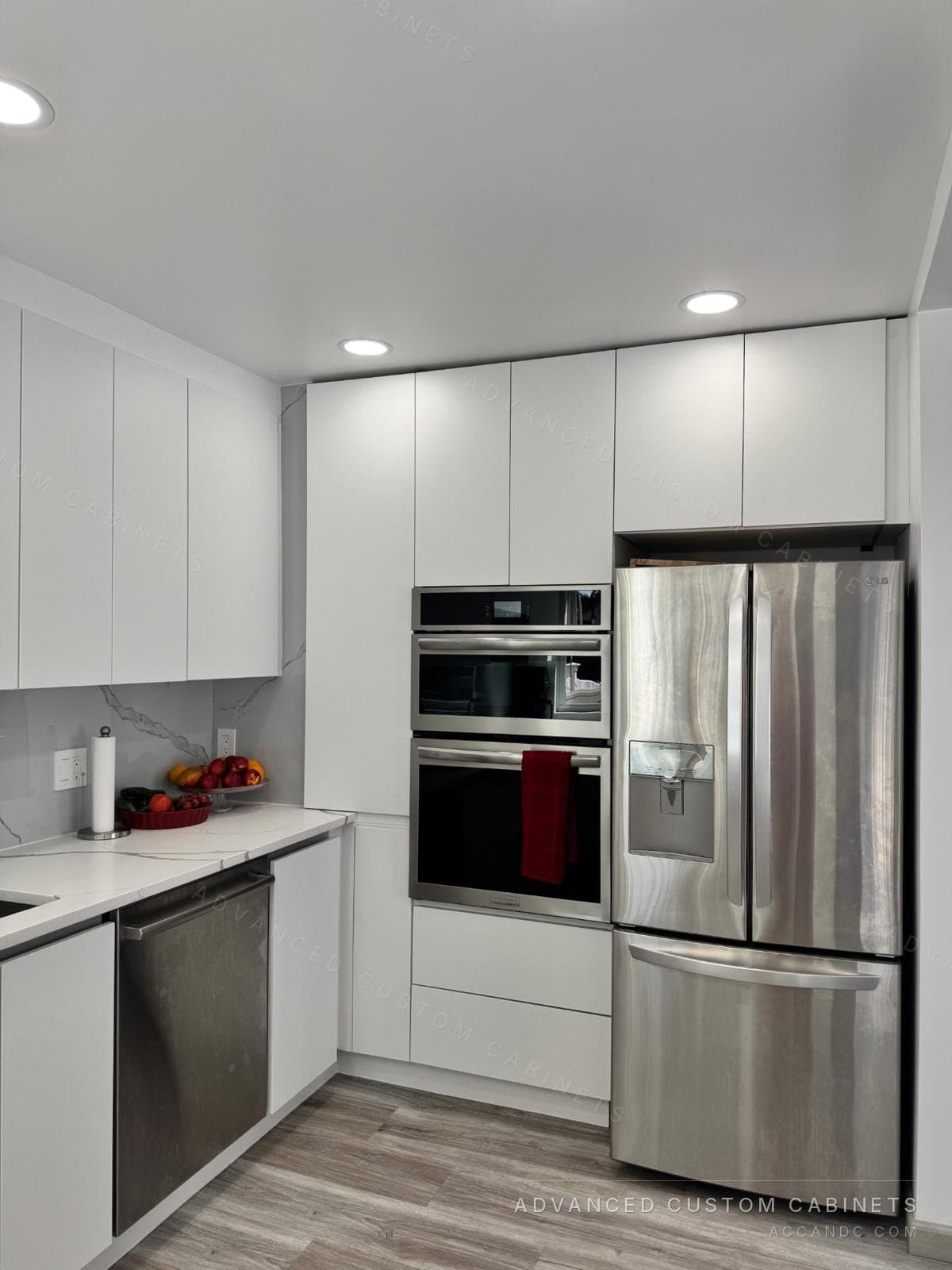
- **The end of a kitchen run.** The last 36 to 48 inches of counter beside the refrigerator is the classic spot: milk is one step away and the station stays out of the cooking triangle.
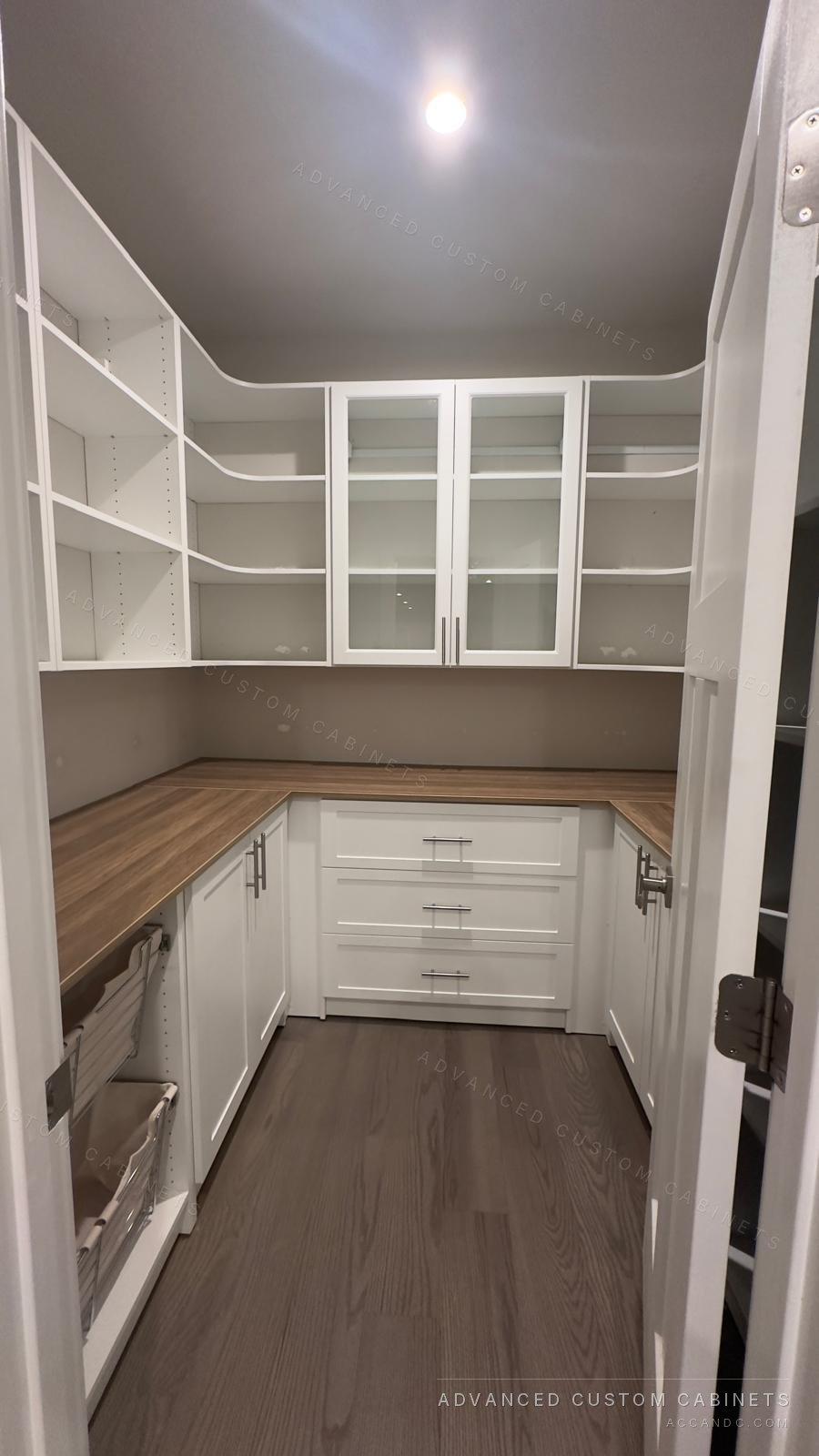
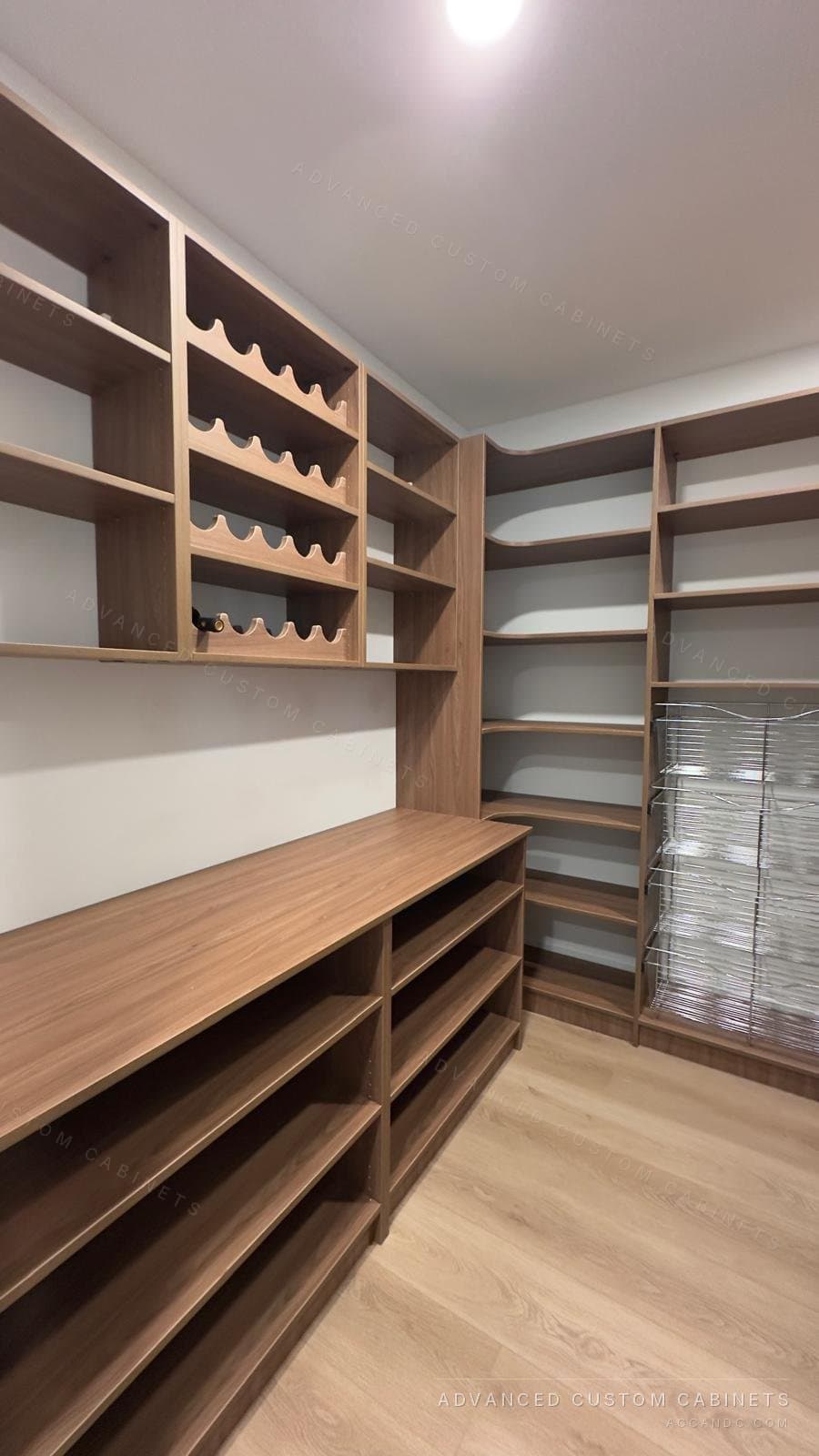
- **A pantry counter.** A walk-in pantry with a counter at 36 inches already has the depth, the wall and usually the outlet. The machine lives there, out of sight, and the kitchen counter stays clear.
- **A butler's pantry.** Between the kitchen and the dining room, a coffee station shares the run with the wine fridge and the glassware; the butler's pantry guide covers widths and counter depths for that room.
- **A dining room wall.** A hutch-style run of base cabinets with open shelves or glass doors above serves coffee after dinner without anyone walking into the kitchen.
- **A reach-in closet.** A hall or pantry closet 24 inches deep, with the doors removed or replaced by pocket doors, takes a counter, two drawers below and shelves above.
- **A basement or family room bar.** Here the station often grows into a beverage bar with an undercounter refrigerator and a small sink.
Coffee stations in Philadelphia-area homes
Which spot wins depends on the house. In a Philadelphia rowhouse the kitchen is often a single wall or a galley, so the last stretch of counter beside the refrigerator is usually the only place a station fits, and a narrow open shelf above it keeps the mugs off the counter. In the twins and colonials of Northeast Philadelphia and Bucks and Montgomery counties, a separate dining room is common, and a hutch-style station on its wall leaves the kitchen counter completely free. Where a house has a finished basement, the station there tends to grow into a family-room bar with a small refrigerator for milk and drinks.
Coffee bar cabinet dimensions
The cabinets themselves are standard kitchen sizes. The one number you need to get right is the space between the counter and whatever hangs above it.
| Element | Kitchen standard | For a coffee bar |
|---|---|---|
| Base cabinet depth | 24 in | 24 in, so the counter lines up with the kitchen |
| Counter height | 36 in | 36 in |
| Upper cabinet depth | 12 to 15 in | 12 in, so the machine's top stays reachable |
| Counter to upper cabinet | 18 in | 20 to 24 in, or open shelves instead of uppers |
| Run width | any | 30 in for one machine, 36 in for a machine and a grinder, 48 in or more with a kettle or a second machine |
The number that catches people is the gap above the counter. The usual 18 inches clears a drip coffee maker, but an espresso machine with a water tank that fills from the top, a bean hopper on a grinder or a cup-warming tray needs more. Measure your machine with its lid fully open, add 2 inches, and set the bottom of the upper cabinet at that height. If the answer is more than 24 inches, skip the uppers above the machine and use one or two open shelves for mugs, which can sit wherever the machine allows.
Width is simple arithmetic. Add up the footprints of what lives on the counter, say a machine 12 inches wide, a grinder 7 inches and a kettle 9 inches, then add 12 inches of landing space for the cup and the milk jug. That example comes to 40 inches, so a 48-inch run gives room to work and a 36-inch run would be tight.
Outlets and circuits
The most common complaint about a new coffee station is a breaker that trips when the espresso machine and the kettle run at the same time. Every appliance has its wattage printed on a label underneath, and an ordinary 20-amp kitchen circuit supplies about 2,400 watts, so two appliances that add up to more than that will trip it. Check the two labels before you decide where the station plugs in.
You do not need to work out the wiring rules yourself, but it helps to know what your electrician will follow. Kitchen, pantry and dining room outlets run on at least two 20-amp circuits, and outlets above a counter are GFCI-protected, the kind with test and reset buttons (2021 International Residential Code, sections E3703.2 and E3901.3, and section E3902.6). Pennsylvania has used that code for houses since January 1, 2026 under its Uniform Construction Code, and in Philadelphia anything beyond a minor repair needs an electrical permit, with the work done by a licensed electrical contractor.
What that means for your plan:
- Ask for the station's outlets on a circuit that does not also run the toaster or the microwave.
- Put the outlets where the cords reach without crossing the counter: behind the machine, and inside an appliance garage if you want one.
- Leave the wiring to a licensed electrician. The cabinets are built with openings and cord cutouts where the electrician puts the outlets.
Water: plumbed machines, filters and a bar sink
Most coffee stations run on a refillable tank and need no plumbing at all. Two upgrades change that. A plumbed-in espresso machine or a refrigerator-style water filter needs a cold-water supply line with its own shut-off valve, run through the back of the base cabinet. A bar sink needs both a supply and a drain, which ties the station to a wall where plumbing can reach, usually the wall shared with the kitchen sink or a bathroom.
Either way, the plumber sets the lines first and the base cabinet is built with an open back panel or a removable panel at the valve, so the shut-off can be reached without pulling the cabinet. Laminated board with sealed edges handles the occasional drip from a water tank better than raw wood.
Storage that keeps the counter clear
The station works when everything for one cup is within one step. Plan the storage around the routine, top to bottom:
- **Open shelf or glass-door upper:** everyday mugs and cups, at eye level so they are the first thing you reach.
- **Top drawer, 4 to 6 inches deep:** spoons, filters, the tamper, pods in a drawer insert.
- **Deep drawer below it:** bags of beans, tea, sugar and the backup pods, standing up so the labels read from above.
- **Pull-out on full-extension glides:** a slide-out shelf for the machine, so it comes forward to fill and clean and goes back under the upper cabinet when not in use.
- **Base cabinet or deep drawer:** the knock box, the descaler and the cleaning tablets, and a small trash or compost pull-out if the station is far from the kitchen bin.
- **Undercounter refrigerator:** milk and cream at the station itself, built into the run to the appliance's specification sheet.
A tall narrow pull-out beside the station, 6 to 9 inches wide, holds syrups, sprinkles and the frothing jug in the space that would otherwise be a filler strip.
Doors: appliance garages, pocket doors and open shelves
An appliance garage is a small cabinet that sits on the counter with a door that lifts, rolls or folds away, so the machine disappears when you are done. It needs an outlet inside it, and the door should open fully while the machine runs, because steam and heat should not be trapped in a closed box.
For a station in a dining room or a converted closet, pocket doors that slide back into the cabinet sides hide the whole station after breakfast and leave the counter fully open when it is in use. Open shelves are the low-cost choice: they suit a station that is in use all day and never needs to be hidden.
Finishes and hardware
A coffee station takes water, steam and grounds every day, so the finish matters more than the style. Our cabinets are built from 3/4-inch and 1-inch laminated board or 3/4-inch plywood with 2 mm PVC edges, in 25 colors in stock, with soft-close hinges and full-extension glides from European hardware makers. A wood-grain counter over white cabinets, or a white counter over a walnut finish, makes the station read as a piece of furniture rather than more kitchen. Glass-front uppers with a light strip show off the mugs; the closet lighting guide explains color temperature and how to wire strips inside cabinets.
What a coffee bar costs
A coffee station is priced like the cabinetry around it: by the cabinets, drawers, pull-outs and doors that go into it, not as a separate product. Our cost guide lists typical starting prices for kitchen cabinetry and explains what moves a project up. An appliance garage, a plumbed machine, an undercounter refrigerator and glass-front uppers each add to the price; a run of base cabinets with a counter and two open shelves is the simplest version. For a figure for your room, call for a quote after a design visit.
How the planning is done
A designer visits your home anywhere in the Philadelphia area for free, measures the wall, notes where the outlets and the plumbing are, and asks what you make every morning, so the counter, the shelf heights and the pull-outs match the machine you own. You see the station in a 3D drawing before anything is built. The cabinets are made in our Warminster, PA shop, usually within 2 to 4 weeks, and installed by our own crew, with a lifetime limited transferable warranty. To book a design visit, call (267) 888-6680 or send a request through the contact page.
Questions people ask
How deep should a coffee bar cabinet be?
Use the standard 24-inch base cabinet so the counter lines up with the kitchen and holds a machine with room behind it for the cord. Upper cabinets above the station are best at 12 inches deep, so the top of the machine stays reachable.
How high above the counter should cabinets be over a coffee bar?
The usual 18 inches clears a drip coffee maker. For an espresso machine with a top-fill water tank, measure the machine with its lid open and add 2 inches, which usually lands at 20 to 24 inches; above that, use open shelves instead of uppers.
Does a coffee station need its own circuit?
The code sets the minimum for the room, not for the machine: two or more 20-amp small-appliance circuits for the kitchen, pantry and dining room receptacles, and GFCI protection at countertop outlets. An espresso machine and a kettle together can use most of a 20-amp circuit, so ask a licensed electrician to put the station on a circuit that is not shared with the toaster or the microwave.
Can a coffee bar go in a dining room?
Yes. A run of base cabinets with a counter and open shelves or glass doors above makes a hutch-style coffee station, and dining room receptacles are served by the same small-appliance circuits as the kitchen. Plumbing is the only limit: a plumbed machine or a sink needs a wall where water lines can reach.
What is an appliance garage?
A small cabinet on the counter with a door that lifts, rolls or folds away, built around an outlet, so the coffee machine stays plugged in and out of sight. Leave the door open while the machine runs so heat and steam can escape.