Start with an inventory, not a catalog
Before any organizer idea, count what the closet has to hold: how many feet of hanging clothes, how many of them are long (dresses, coats, robes), how many stacks of folded clothes, how many pairs of shoes, and what small things have nowhere to go (belts, scarves, jewelry, chargers). Most wardrobes are about 60 percent short hanging, 10 percent long hanging and 30 percent folded, and almost all of the short hanging can go on two rods instead of one. That count decides the layout; the catalog only decides the finish.
The second number is the closet itself: width wall to wall, depth to the inside of the door, height to the ceiling, and the width of the door opening. The reach-in dimensions guide gives the rod heights and shelf spacing behind every idea below; this page is about where the parts go.
Idea 1: double hang on one side, long hang on the other
The single change that doubles a closet. One side of the closet gets two rods, at about 41 and 82 inches, for shirts, jackets and folded-over pants. The other side keeps one rod at 66 to 70 inches for the long garments, with the floor under it clear for a shoe shelf or a hamper. In a 6-foot closet that is 24 inches of double hang, 24 of long hang and 24 in the middle for whatever the inventory says is missing, usually shelves or drawers. A closet that held one 6-foot row of clothes now holds the same row twice over on one side and keeps the long things on the other.
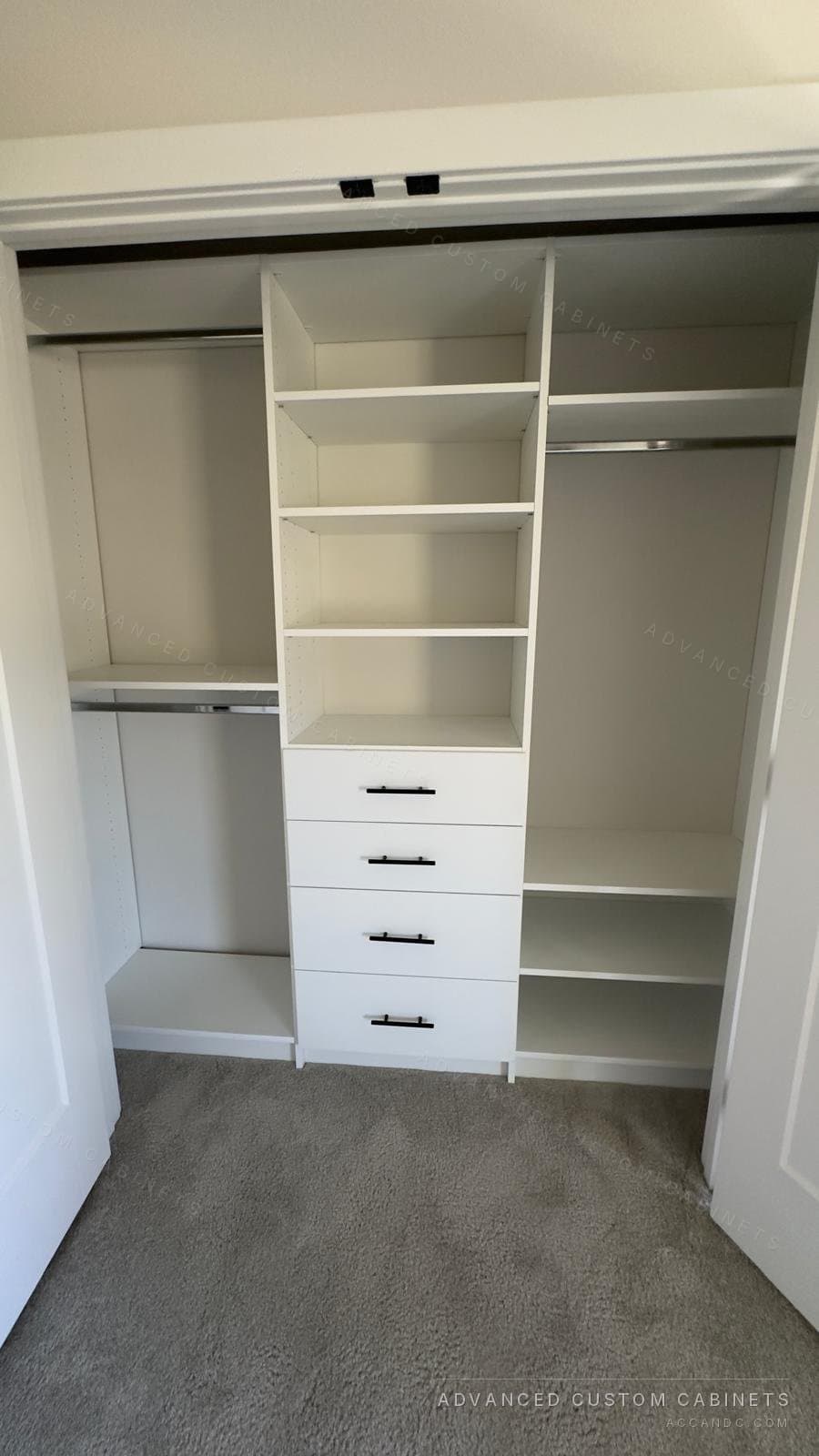
Idea 2: the center tower with drawers
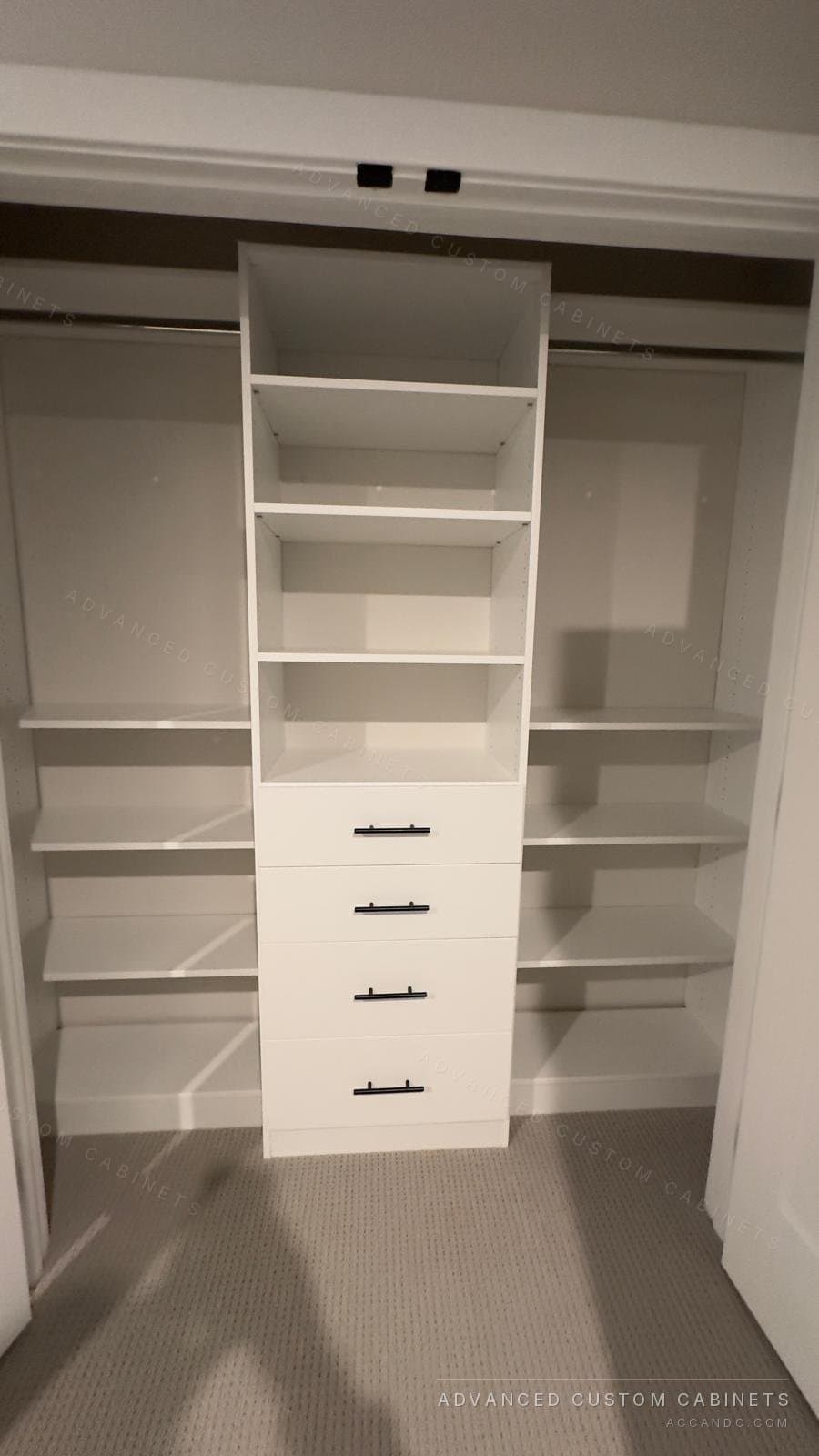
A tower is a column of shelves and drawers that runs floor to ceiling in the middle of the closet, behind the widest part of the door opening. It is the closet organizer with drawers that people search for: three or four drawers at the bottom for socks, underwear, T-shirts and sweaters, adjustable shelves above for folded clothes and bins, and the top shelf for what is used twice a year. A tower 18 to 24 inches wide replaces a small dresser in the bedroom; at 30 inches it replaces a tall one. The hanging sections sit on either side of it, which also stops the hangers from sliding into one heap in the middle.
Idea 3: shelves instead of a rod
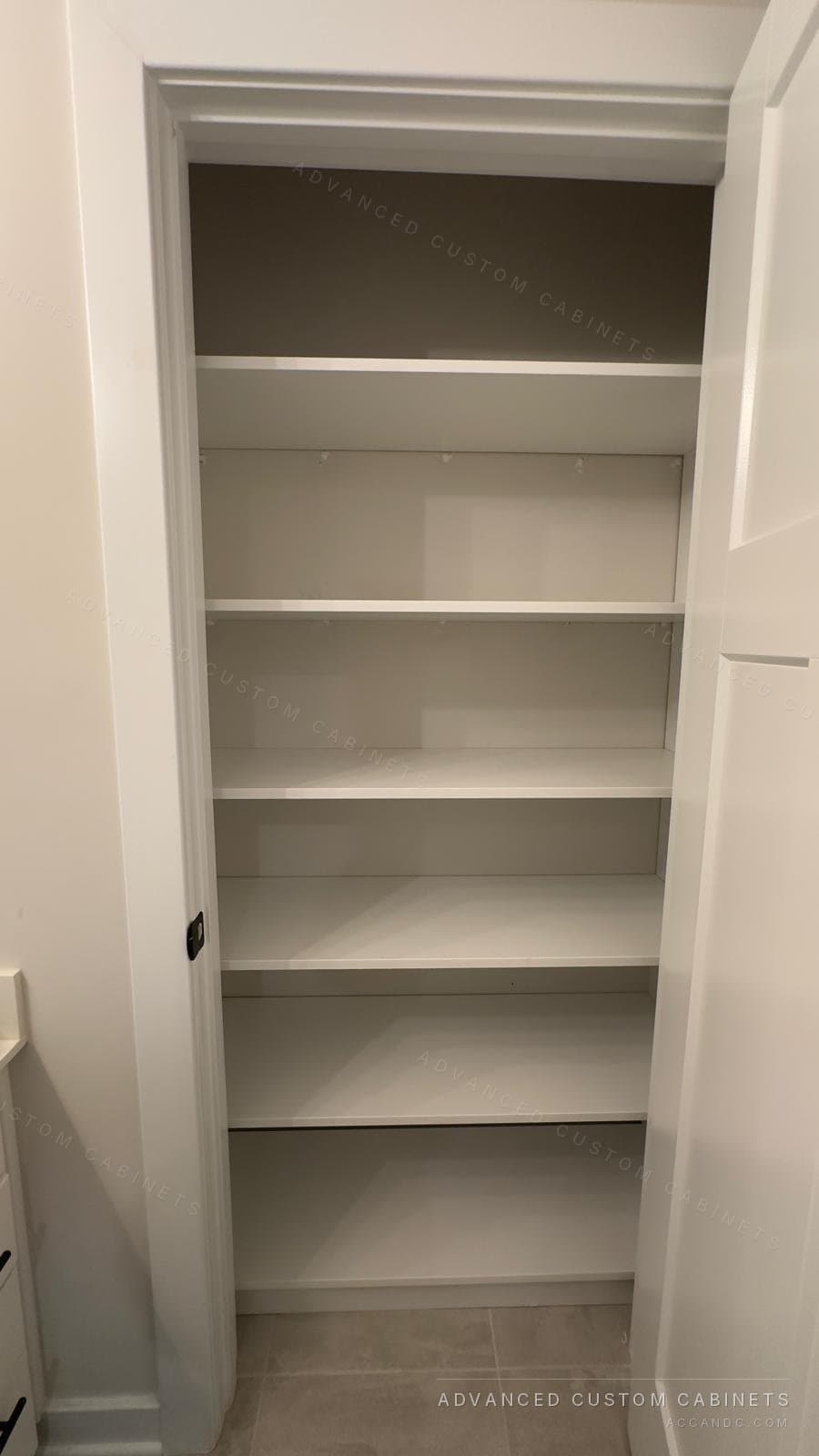
Not every reach-in should hang clothes. A closet in a hallway, a child's room or a guest room often holds more folded things than hanging ones, and a wall of adjustable shelves 14 to 16 inches deep stores them better than a rod with a shelf above it. Shelves 12 to 14 inches apart take two stacks of sweaters per 24 inches of width; closer spacing at the top takes bins and boxes; a run of shelves 7 to 8 inches apart at the bottom takes shoes. When the shelves are adjustable in small steps, the closet changes as the family does: a toddler's closet that is all shelves becomes a teenager's closet with a rod added across the top half.
Idea 4: shoes on the floor, not in a pile
The floor of a reach-in is where shoes end up anyway, so build for it: a raised shelf 4 to 6 inches off the floor with a second shelf 7 to 8 inches above it, running under the long hang. Two tiers under 24 inches of rod hold six to eight pairs and leave the floor itself clear to sweep. Angled shelves show the shoes better and take an inch more depth; flat shelves hold more. Boots go on a 16-to-18-inch shelf at the end or hang from clips on the lower rod. The shoe storage guide covers the counts and spacing for a larger collection.
Idea 5: use the dead corners behind the door frame
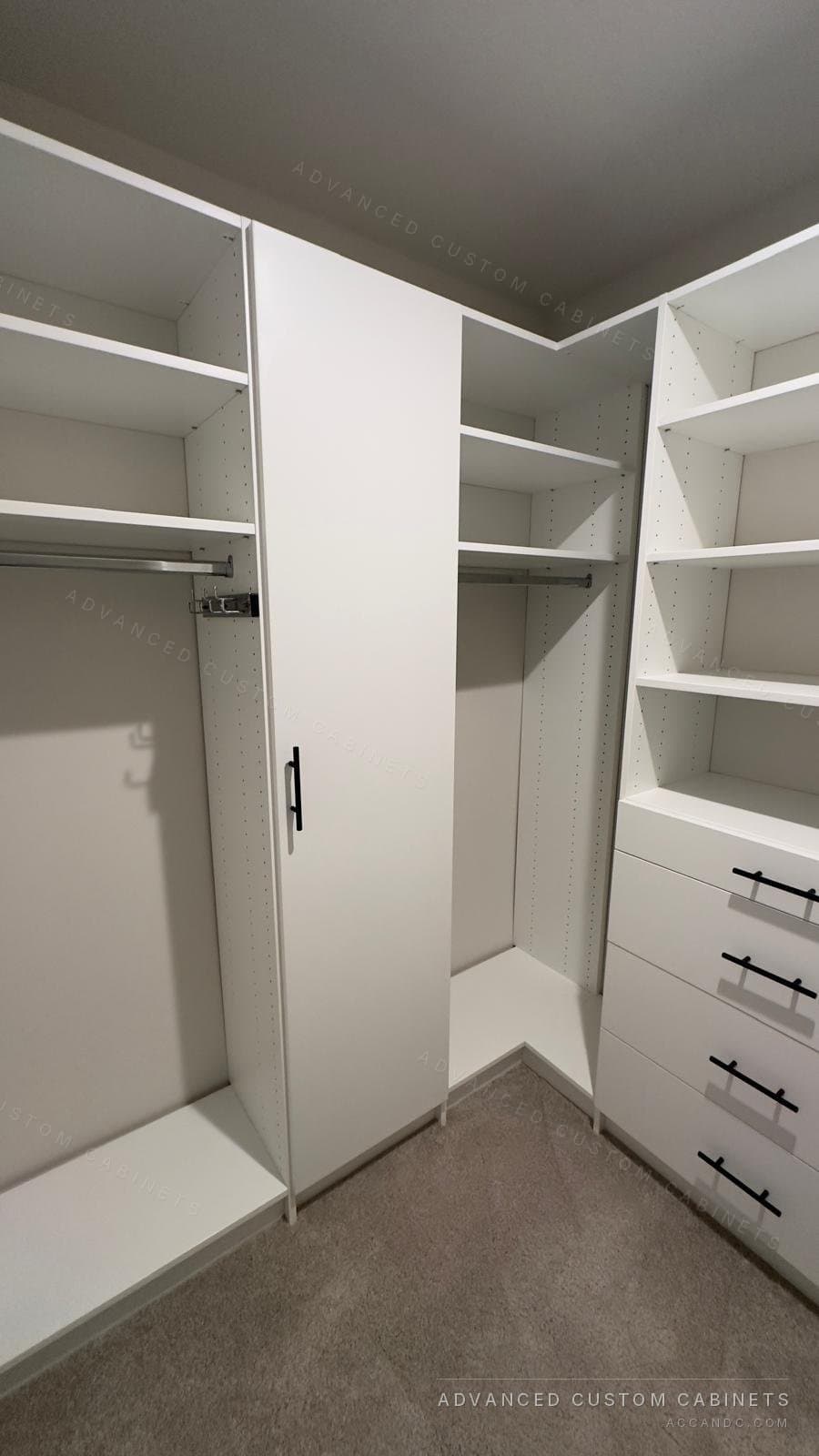
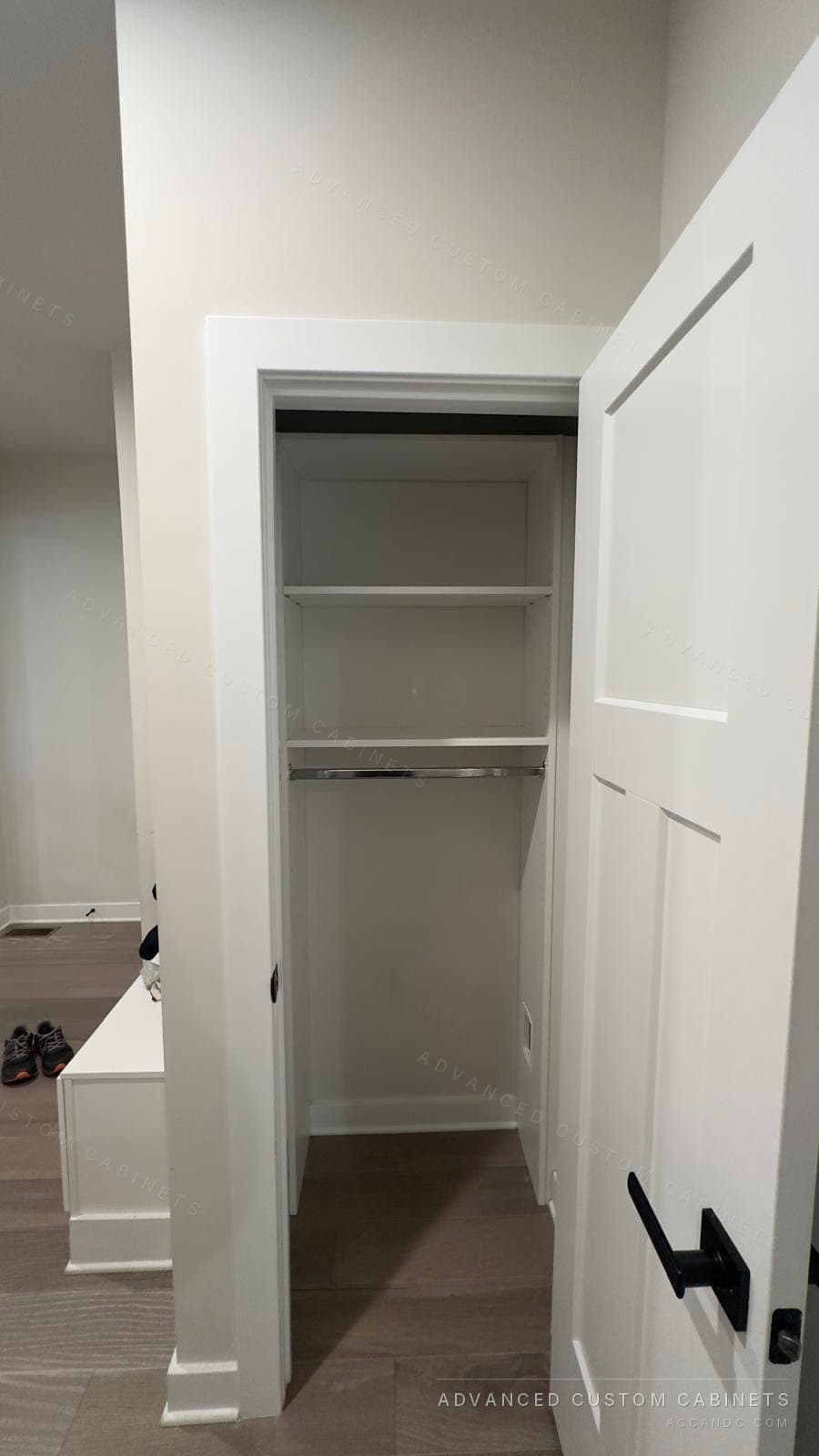
Behind each side of the door frame there is a strip of closet 6 to 12 inches wide that you cannot see into. Give it long hang, where you reach in sideways for a coat, or a row of hooks for bags and belts, or a pull-out valet rod for tomorrow's outfit. Never shelves: a shelf you cannot see becomes a shelf you forget. The inside of a hinged door takes a shallow rack for scarves, ties and jewelry; bifold and sliding doors do not, so with those the small things go into a shallow drawer in the tower instead.
Idea 6: change the doors, or lose them
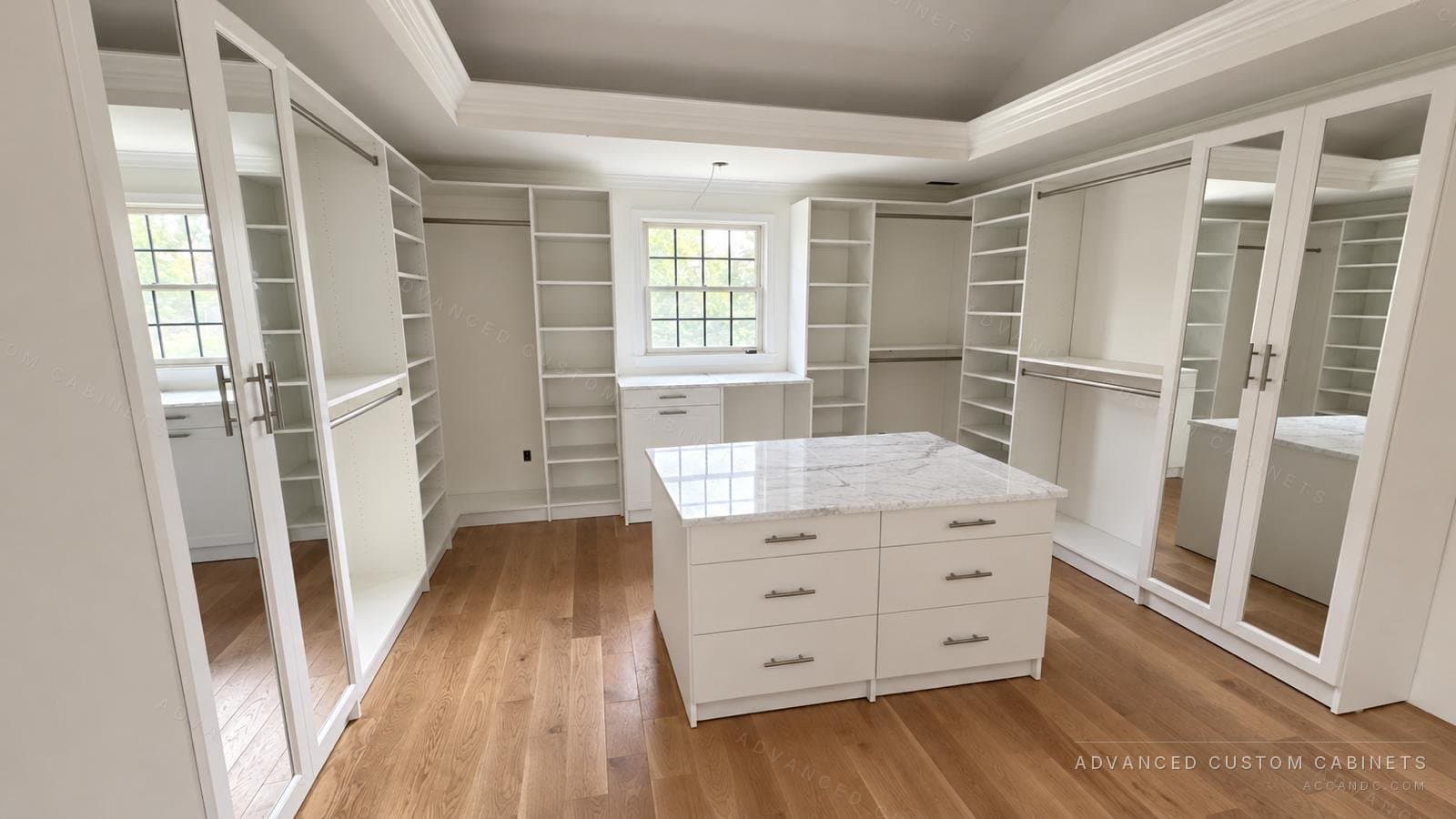
Sliding bypass doors hide half the closet at all times and are the reason so many reach-ins feel full when they are not. Bifold doors open about 80 percent of the width; a pair of hinged doors opens all of it but needs floor space in the room. In a bedroom alcove, taking the doors off and finishing the closet as an open wardrobe with a drawer bank and matching panels turns a closet into furniture, which the wardrobe wall guide compares with an armoire. Whatever the doors do, the layout is drawn around what you can reach when they are open.
Small closet organization tips that cost nothing
- Move the single rod up to 68 inches and add a second rod at 41 inches below it: the cheapest double hang there is.
- Use one kind of hanger. Slim hangers of the same size take about a third less rod than a mix of wood, wire and plastic.
- Turn the shelf above the rod into two shelves. The second one, 12 inches higher, takes the bins that were on the floor.
- Put a two-tier shoe shelf on the floor under the long hang and sweep the floor for the first time in years.
- Store out-of-season clothes somewhere else: under the bed, in the garage cabinets, on the top shelf in labeled bins.
- Hang the small things: belts and scarves on hooks behind the door frame, bags on the dead-corner rod.
- Fold the T-shirts upright in a drawer or a bin so you see every one, and give the sweaters the shelf.
- Light it. A battery LED strip under the top shelf shows the back of the closet, and a closet you can see into stays organized.
- Measure before buying any kit: 22 inches of depth is the minimum for hanging, and many closets in older homes are shallower than they look.
- Leave 10 percent of the rod empty. A closet with no slack goes back to a heap within a month.
Which organizer system fits the layout
Once the layout is drawn, the system follows. Ventilated wire shelving is the cheapest way to get a second rod and a shelf, and it sags under heavy stacks and lets small things fall through. Rail-hung modular kits from the home centers give you real shelves and drawers in fixed widths, cut to length at home, with the gaps and the fillers that fixed widths bring. A custom organizer is built to the closet's exact width and depth, floor-mounted, with every shelf adjustable and drawers that open fully, and it is the only one that uses the dead corners and the odd walls of an older house. The closet systems comparison weighs the three in detail; the short version is that the layout above fits all three, and the system decides how much of the wall is actually used.
What a custom reach-in organizer includes
A custom reach-in is built from 3/4-inch and 1-inch laminated board or 3/4-inch plywood with 2 mm PVC edges, in 25 colors in stock, with shelves adjustable in 1 1/4-inch steps, drawers on European full-extension glides with soft-close hardware, and panels scribed to walls that are not square. A reach-in rebuilt inside with shelves, shoe shelves and hanging starts around $400; a tower with drawers, doors or a tall section moves it up, and the cost guide lists the starting points by room.
How the planning is done
A designer measures the closet on a free in-home visit, counts what hangs and what folds, and draws the layout in 3D so you see the two rods, the tower and the shoe shelves before anything is built. The organizer is made in our Warminster, PA shop, usually within 2 to 4 weeks, and installed by our own crew, with a lifetime limited transferable warranty.
Questions people ask
What is the best closet organizer idea for a small reach-in?
Double hang on one side and long hang on the other, with a two-tier shoe shelf on the floor under the long hang. It doubles the hanging space in a 4-to-6-foot closet and uses the floor without taking any width from the rods.
Can a reach-in closet have drawers?
Yes, in a center tower behind the widest part of the door opening, 18 to 30 inches wide, with the hanging sections on either side. Drawers placed behind the door frame cannot open, so the tower always goes in the middle.
Should a small closet have shelves or a rod?
Count the clothes. If most of them fold (a child's room, a guest room, a hall closet), a wall of adjustable shelves 14 to 16 inches deep holds more than a rod. If most of them hang, two rods on one wall hold more than any shelving.
What goes in the corners of a reach-in closet behind the door frame?
Long hang, hooks or a valet rod, anything you reach for sideways. Shelves there cannot be seen from the room and end up forgotten.
How much does a custom reach-in closet organizer cost?
A reach-in refitted with shelves, shoe shelves and hanging starts around $400. A tower with drawers, new doors or a tall cabinet section raises the figure; the exact price follows the layout and the hardware, and comes with the free in-home design.