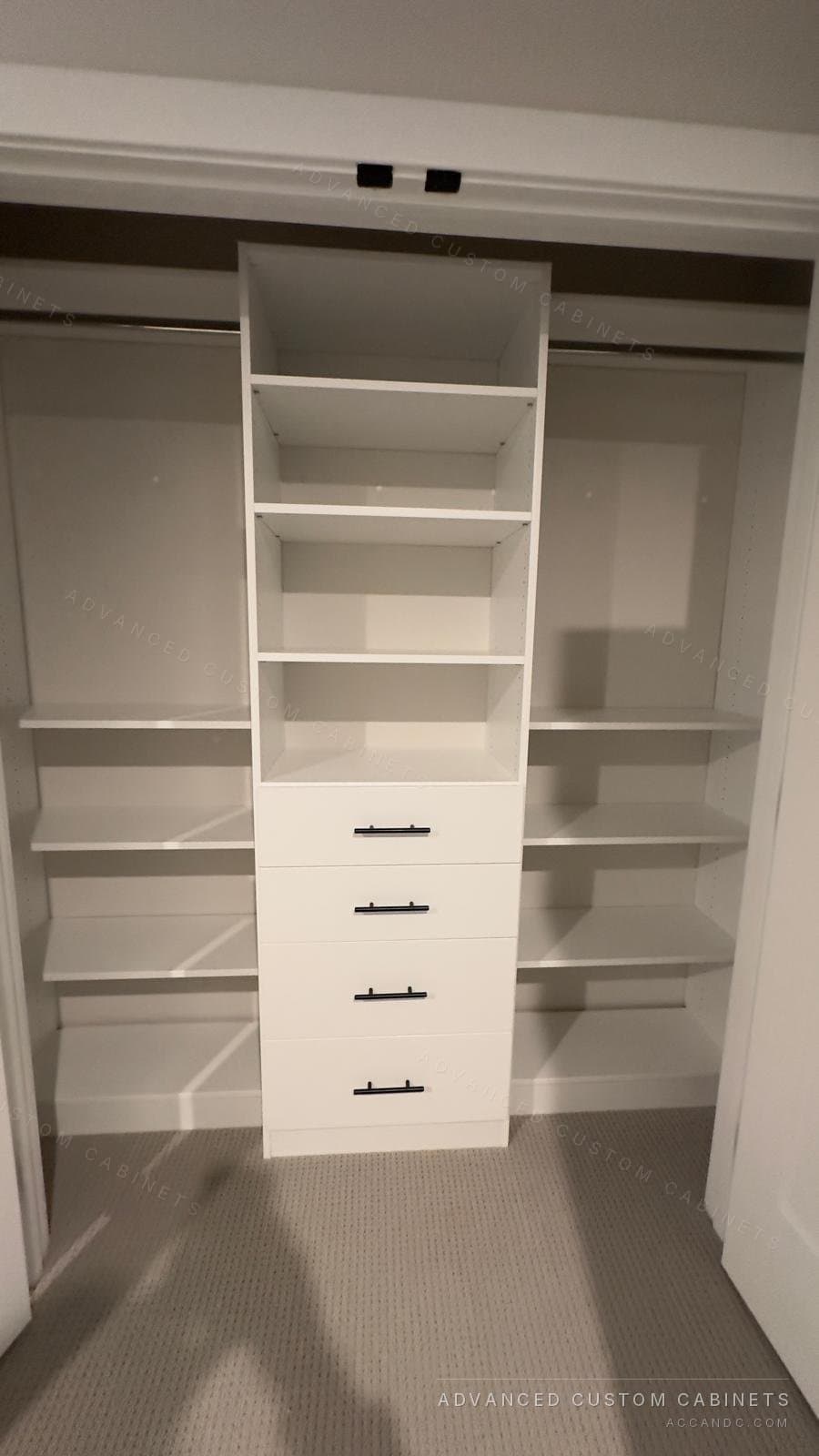
The numbers at a glance
| Dimension | Standard | Notes |
|---|---|---|
| Closet depth, inside | 24 in | 22 in is the working minimum for hangers; below 20 in the rod turns sideways |
| Single rod height | 66 to 68 in from the floor | One rod with a shelf above it; the classic builder closet |
| Double hang rods | 40 to 42 in and 80 to 84 in | Shirts, jackets and folded-over pants on both levels |
| Long hang rod | 66 to 70 in | Dresses and coats; keep 3 in of floor clearance under the longest garment |
| Shelf above the rod | Rod center 10 to 12 in below the shelf | Room for the hanger hook and lifting the hanger off |
| Shelf for folded clothes | 12 to 14 in apart, 14 to 16 in deep | Two stacks of sweaters per 24 in of width |
| Shoe shelf | 7 to 8 in apart, 12 to 14 in deep | Boots 10 to 12 in; three pairs per 24 in of shelf |
| Drawer bank | 18 to 30 in wide | Clear of the door swing; 6 to 8 in deep for small items, 10 to 12 in for sweaters |
Closet depth: 24 inches, and why 22 is the floor
A hanger is 17 to 19 inches wide and a hanging jacket adds an inch of shoulder on each side, so a garment on a rod needs about 22 inches front to back. The 24-inch reach-in gives that plus an inch of clearance to the back wall and an inch to the inside of the door, which is why 24 inches has been the standard since closets had doors. At 22 inches the closet still works, but the sleeves touch the door. At 20 inches and less a rod running side to side no longer fits: the options are a rod running front to back with the clothes facing you, pull-down hooks, or shelves and drawers instead of hanging, which is often the better use of a shallow alcove anyway.
Measure depth from the back wall to the inside face of the door, not to the door frame, because the frame and the door thickness take 2 to 3 inches that the drawing has to know about. In older homes the back wall is rarely plumb and the two sides rarely match, so take the depth at the top, the middle and the floor; custom panels are scribed to the smaller number.
Rod heights: single, double and long hang
A single rod sits at 66 to 68 inches from the floor, high enough that a 40-inch shirt or a folded pair of pants clears the floor by more than a foot and low enough that the shelf above it is still reachable. The wasted part is the foot of air under the clothes and the 8 feet of wall that one rod and one shelf never touch.
Double hang puts two rods on the same wall, the lower at 40 to 42 inches and the upper at 80 to 84 inches. Shirts, blouses, jackets and pants folded over a hanger are all shorter than 38 inches, so each level holds a full row and the same width of wall stores twice as much. The upper rod at 82 inches is reachable for most adults; in a closet for a shorter person or a child the pair drops to 36 and 72 inches, and a child's closet starts with the lower rod alone and gains the upper one later.
Long hang is one rod at 66 to 70 inches for dresses, coats and robes, with the floor under it left clear or used for a low shoe shelf. Most wardrobes need less long hang than people think: measure the longest garments and give them a section 18 to 24 inches wide, and give the rest of the wall to double hang.
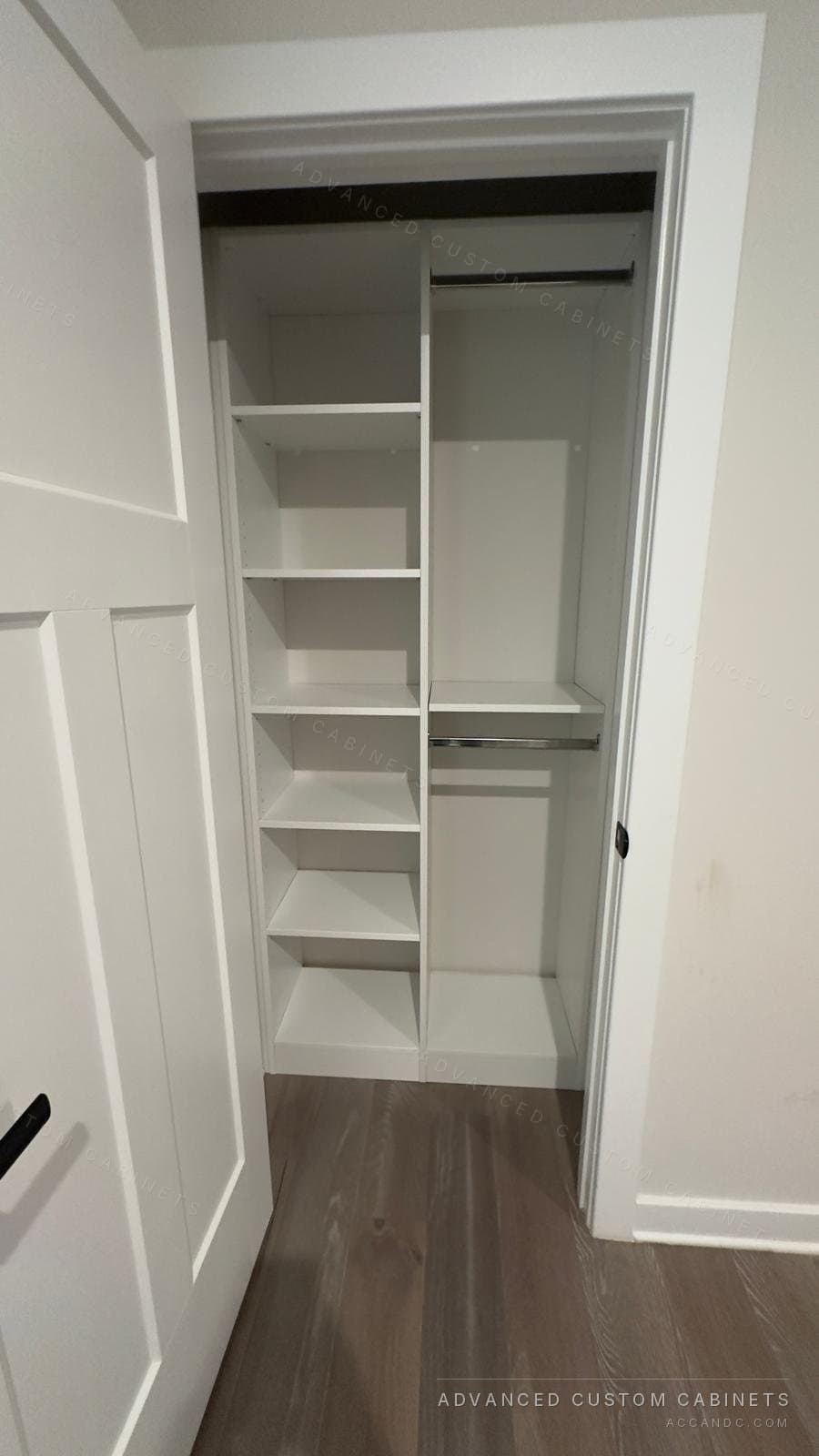
The shelf above the rod
The rod sits with its center 10 to 12 inches below the underside of the shelf above it. Closer than that and the hanger hook has no room to lift off the rod; farther and the gap is wasted. The top shelf is 12 to 16 inches deep so it clears the hangers below it, and in a tall closet a second shelf 12 to 14 inches above the first takes the seasonal bins. Whatever sits on the top shelf should be reachable from the floor: a shelf at 84 inches is the last one most people use without a step.
Shelves for folded clothes and shoes
Folded sweaters and jeans stack 10 to 12 inches high before the stack leans, so shelves for folded clothes go 12 to 14 inches apart and 14 to 16 inches deep. A 24-inch-wide shelf takes two stacks. Shoes want 7 to 8 inches between shelves for flats and sneakers, 9 to 10 for heels and ankle boots, and a 12-to-14-inch depth, because a size 12 men's shoe is just under 13 inches long. Three pairs fit on 24 inches of shelf, four on 30. Tall boots either stand on a 16-to-18-inch shelf or hang from clips on a low rod. A raised two-tier shoe shelf at the floor of a reach-in, under the long hang, is the cheapest shoe storage in the house.
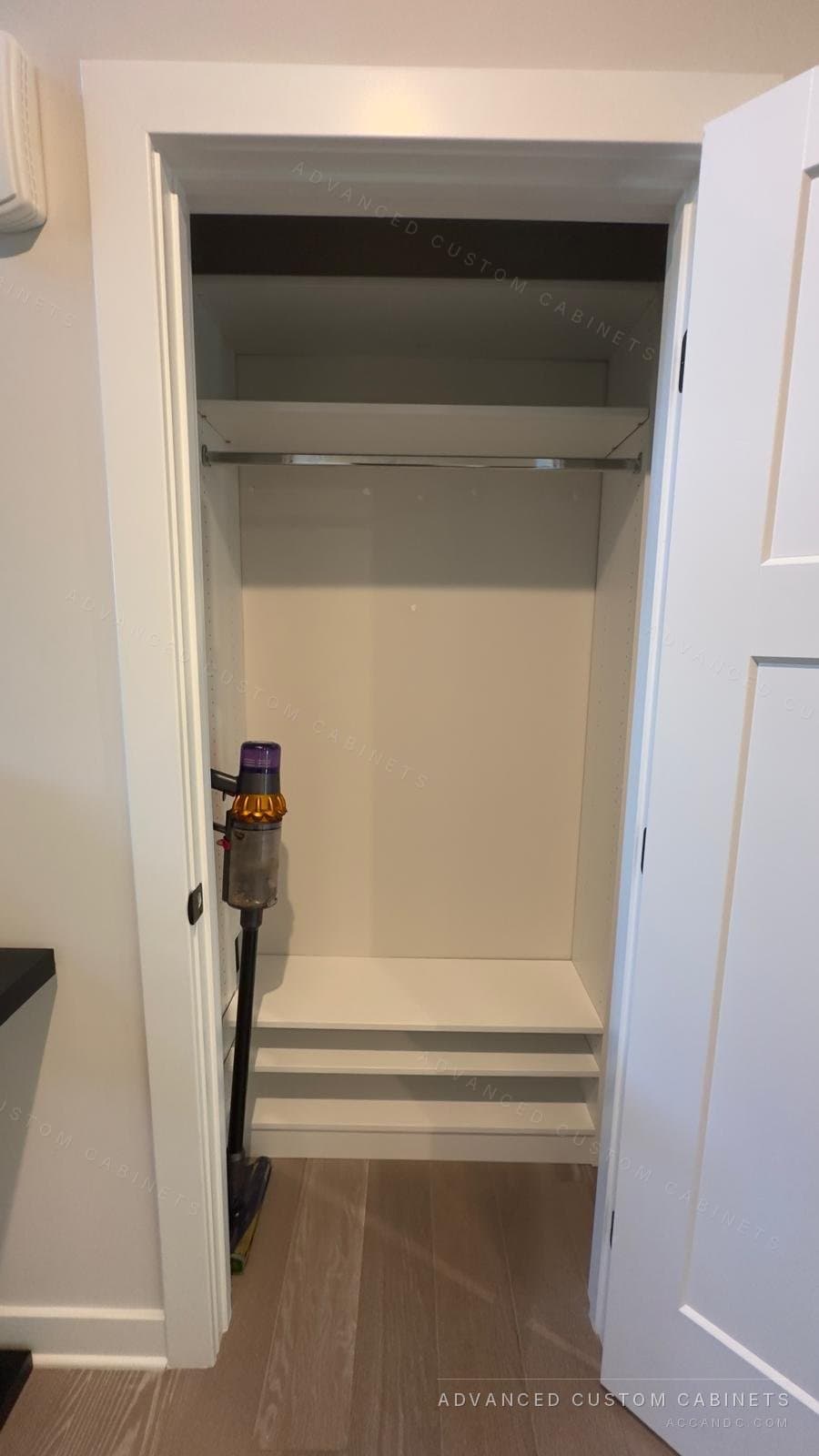
Drawers in a reach-in
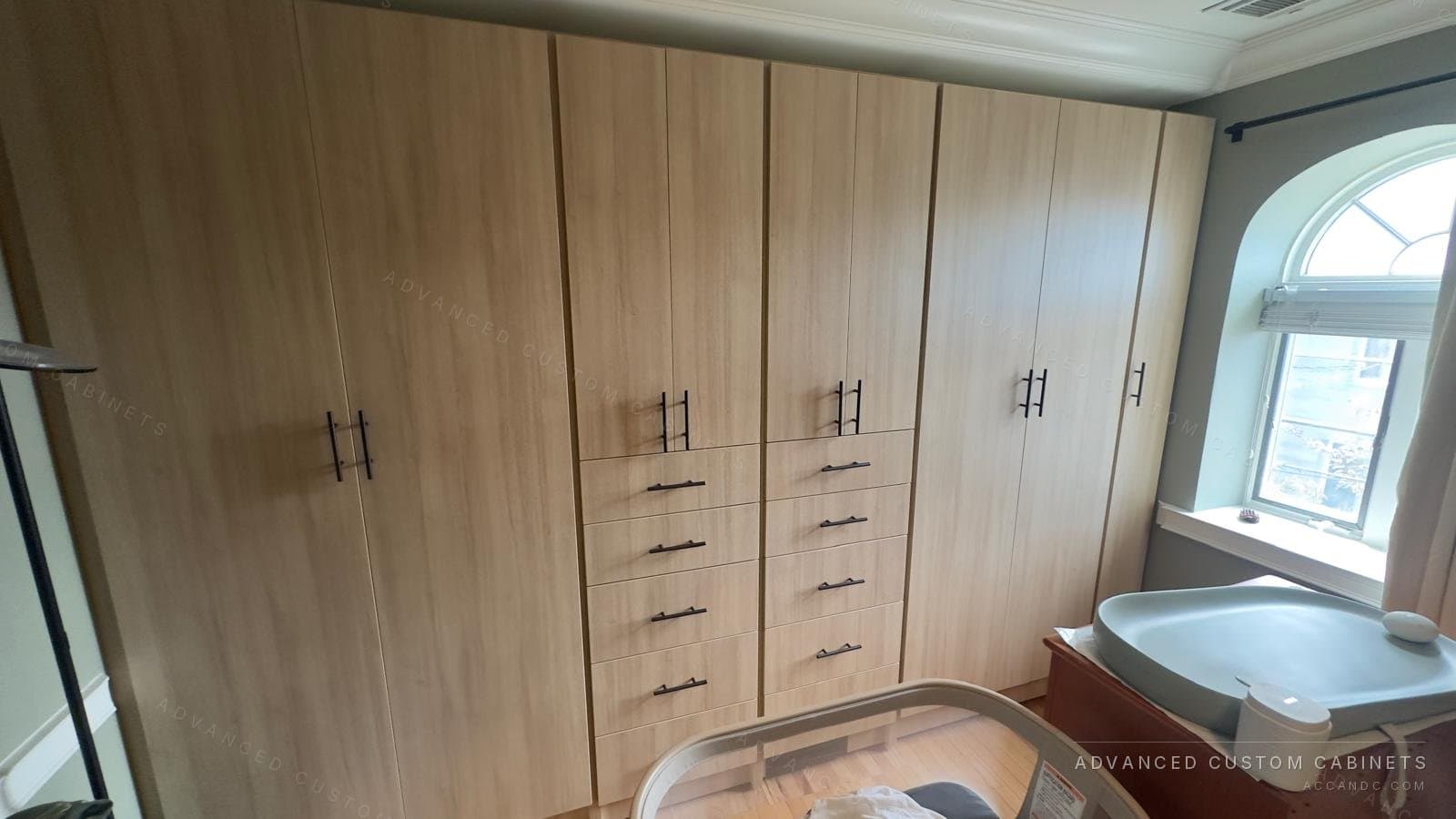
A drawer bank in a reach-in replaces the dresser in the bedroom, and it only works if the drawers can open: they go in the center of the closet, behind the widest part of the opening, never behind the strip of wall beside the door. The bank is 18 to 30 inches wide. Shallow drawers 6 to 8 inches deep take socks, underwear and accessories; 10-to-12-inch drawers take sweaters and jeans. Full-extension glides let the drawer open all the way, which matters in a closet where you cannot step to the side of it.
Doors, openings and the dead corners
The door opening decides what is reachable. A pair of bifold doors on a 6-foot closet opens about 5 feet of it; sliding bypass doors open half at a time, so a sliding-door closet is laid out with the tower in the middle and hanging on both sides, with nothing that needs both doors open at once. The strips of wall behind the door frame, usually 6 to 12 inches on each side, are the dead corners: give them long hang, where you reach in sideways for a coat, not shelves you cannot see.
Two worked layouts
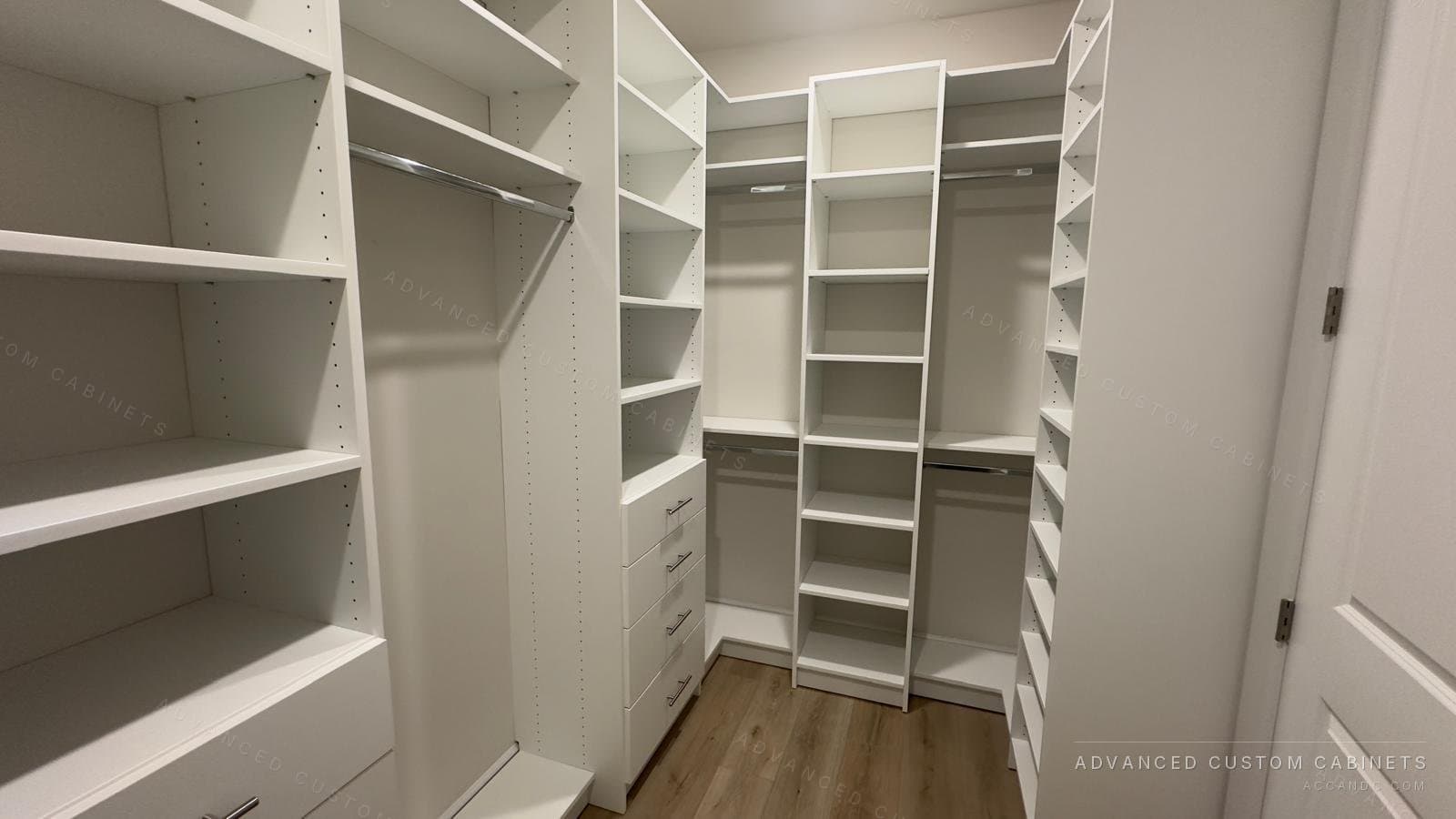
A 6-foot reach-in, 72 inches wide and 24 deep: a 24-inch center tower with shelves above and three or four drawers below; 24 inches of double hang on one side; 24 inches of long hang on the other with a two-tier shoe shelf under it; a full-width top shelf. That is two rods, a drawer bank, shelves and shoes where there was one rod and one shelf.
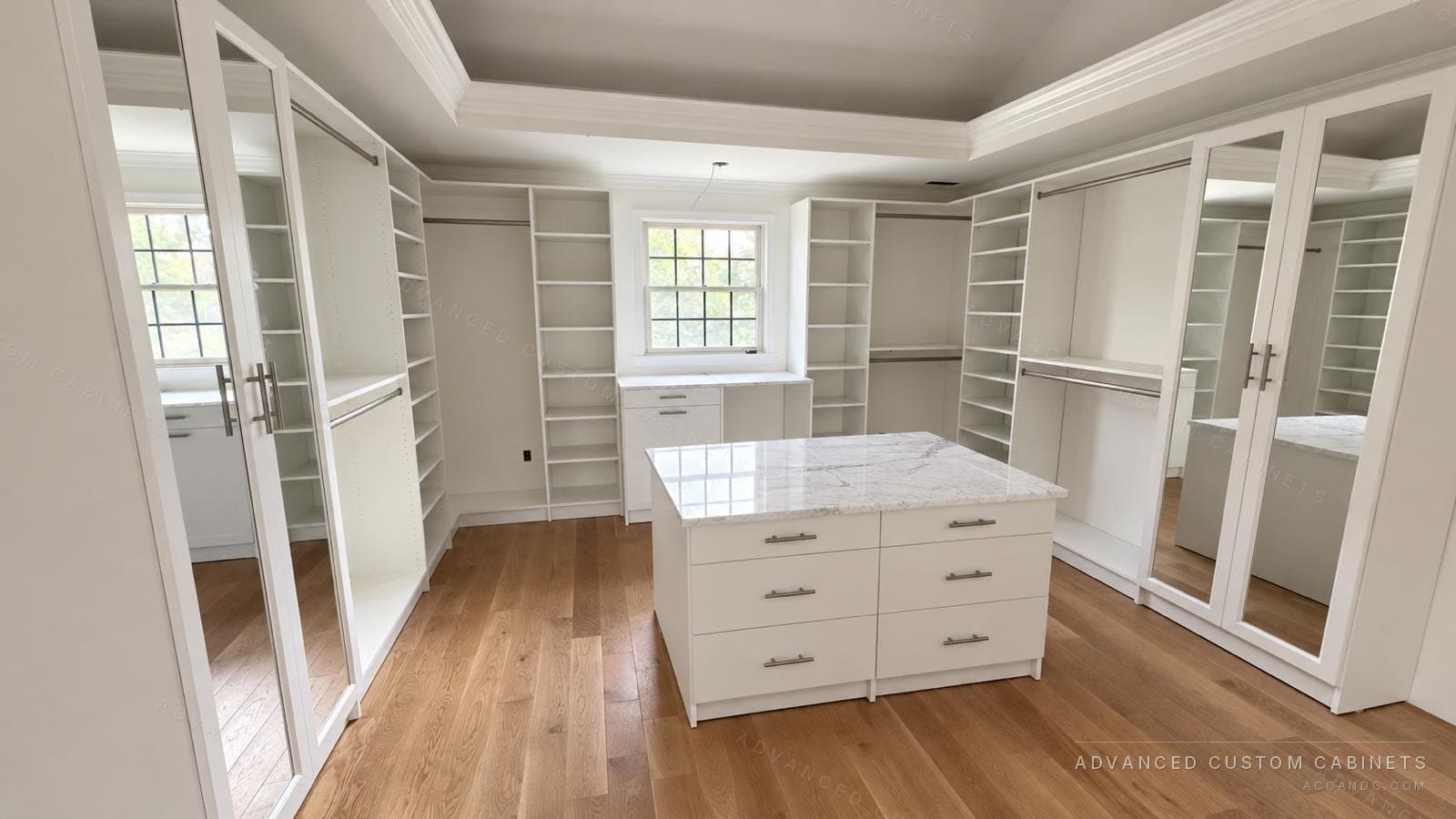
An 8-foot reach-in, 96 inches wide: a 30-inch tower in the middle, double hang on both sides at 24 to 30 inches each, and the dead corners behind the frame as long hang. If two people share it, each side becomes one person's double hang and the tower is split, shelves to one, drawers to the other.
What changes when the reach-in is custom
A custom reach-in is built floor-mounted from 3/4-inch and 1-inch laminated board or 3/4-inch plywood, with every shelf adjustable in 1 1/4-inch steps, so the spacing above follows your clothes rather than a catalog. Drawers run on European full-extension glides with soft-close hardware, shoe shelves and pull-outs are built to the shelf depths above, and the panels are scribed to walls that are not square. A reach-in rebuilt inside with shelves, shoe shelves and hanging starts around $400; drawers, new doors and a tall section move it up, and the cost guide below lists the starting points.
How the planning is done
A designer measures the closet on a free in-home visit, counts what hangs and what folds, and draws the layout in 3D so you see the tower, the rods and the drawers before anything is built. The cabinets are made in our Warminster, PA shop, usually within 2 to 4 weeks, and installed by our own crew. Every closet carries a lifetime limited transferable warranty.
Questions people ask
What is the standard depth of a reach-in closet?
24 inches inside, measured from the back wall to the inside face of the door. A hanger is 17 to 19 inches wide and a hanging garment needs about 22 inches, so 22 inches is the working minimum and 24 gives an inch of clearance on each side.
What is the minimum closet depth for hanging clothes?
22 inches. At 20 inches or less a side-to-side rod no longer fits; the closet then uses a rod running front to back, pull-down hooks, or shelves and drawers instead of hanging.
How high should a single closet rod be?
66 to 68 inches from the floor, with the shelf above it 10 to 12 inches above the rod center so the hanger hook can lift off.
What are the heights for double hanging rods?
The lower rod at 40 to 42 inches and the upper at 80 to 84 inches. Shirts, jackets and folded pants are all shorter than 38 inches, so both levels hold a full row. For a shorter person or a child, 36 and 72 inches.
How far apart should closet shelves be?
12 to 14 inches for folded clothes, 7 to 8 inches for flats and sneakers, 9 to 10 for heels and ankle boots, 16 to 18 for tall boots. Shelves for folded clothes are 14 to 16 inches deep, shoe shelves 12 to 14.