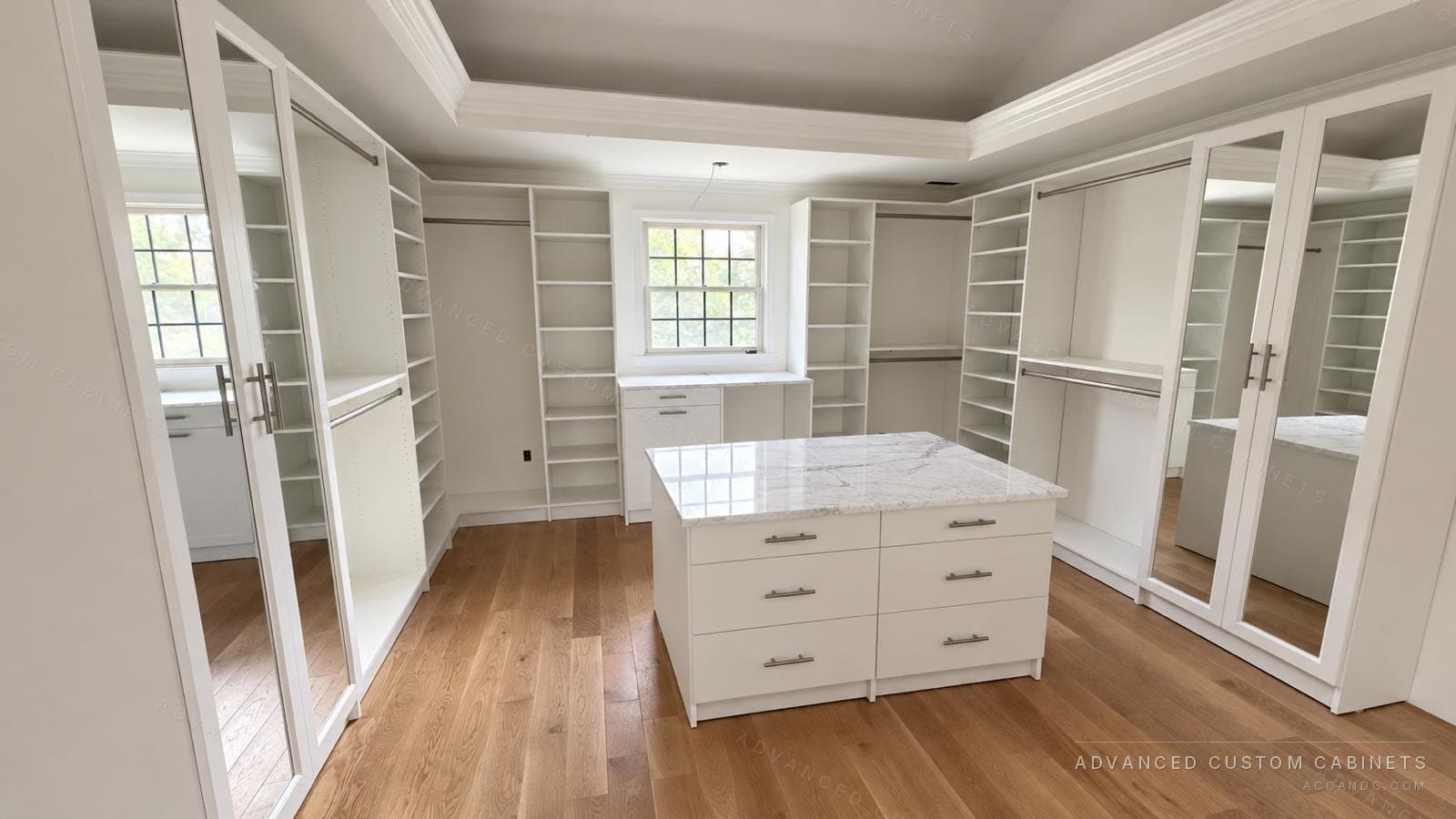
Count the pairs, then measure the longest one
Count every pair that lives in the closet, including the ones in the hall and under the bed, then add a third for the pairs that arrive over the next few years. Measure the longest shoe: a women's size 9 is about 10 1/2 inches, a men's size 12 just under 13. Separate the count into flats and sneakers, heels, ankle boots and tall boots, because each group wants a different shelf spacing. Thirty pairs is an ordinary number for one adult, sixty for two, and both fit in a well-planned closet without taking a single hanging rod.
The numbers
| Shoe type | Clear height between shelves | Shelf depth | Width per pair |
|---|---|---|---|
| Flats, sneakers, loafers | 6 to 7 in | 12 to 14 in | 7 to 8 in |
| Heels and dress shoes | 8 to 9 in | 12 to 14 in | 7 to 8 in |
| Ankle boots | 9 to 10 in | 13 to 14 in | 8 to 9 in |
| Tall boots, standing | 16 to 18 in | 14 to 16 in | 9 to 10 in |
| Tall boots, on clips from a rod | 24 in below the rod | 4 to 5 in per pair | |
| Angled shelf with a lip | 8 to 9 in | 14 in | 7 to 8 in |
Three pairs fit on a 24-inch shelf, four on 30 inches, five on 36. A shelf 12 inches deep leaves a men's 13-inch shoe hanging over the edge, so closets for men's shoes get 14-inch shelves. Shoe shelves are adjustable like every other shelf in a custom closet, in 1 1/4-inch steps, so the spacing follows the shoes you own rather than an average.
Five ways to store shoes
Flat shelves
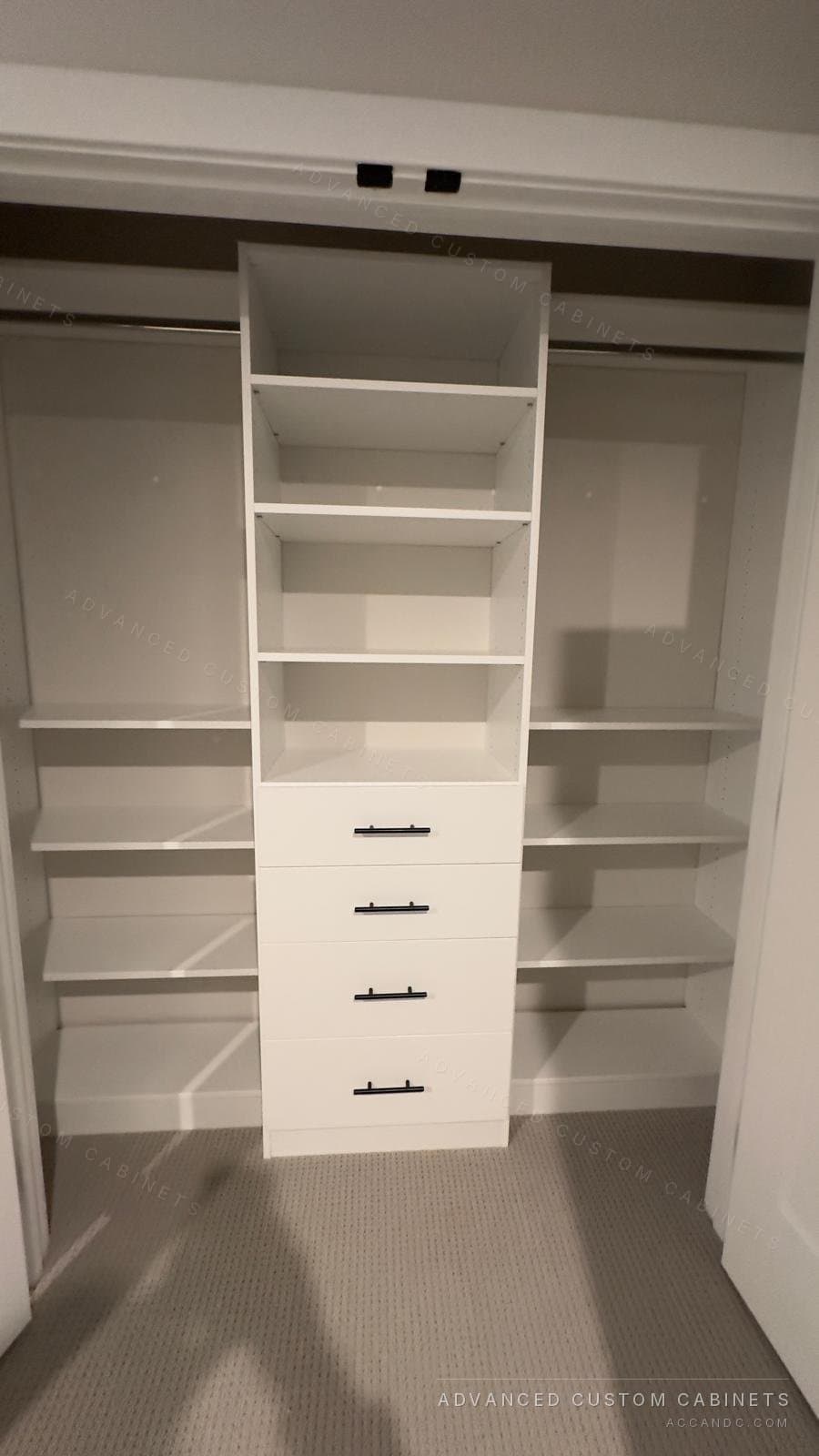
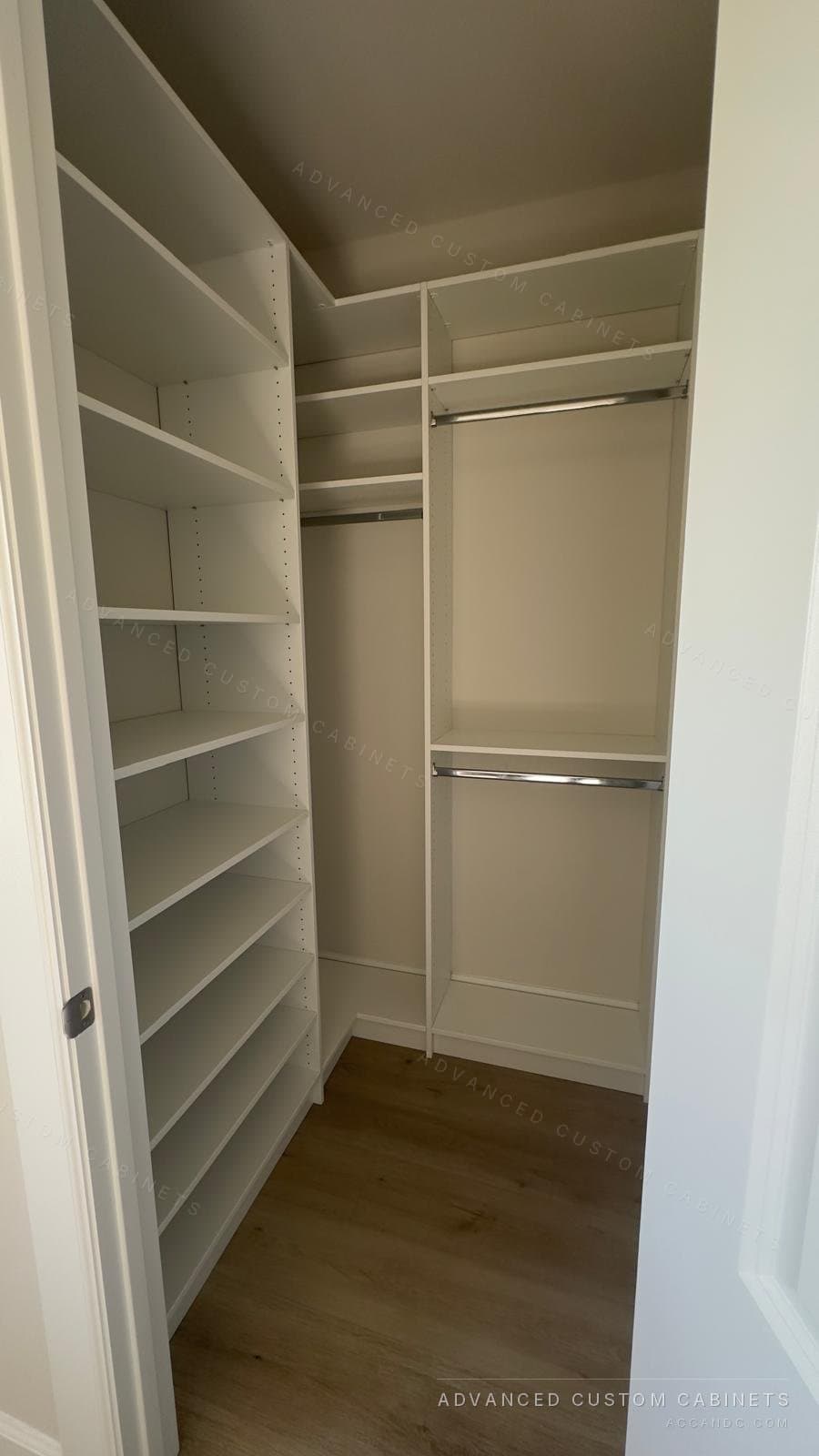
The default and the most flexible: a column of adjustable shelves 12 to 14 inches deep, spaced to the shoes. Shoes sit flat, heel out or toe out, and the shelf doubles as a shelf for bags or folded sweaters if the collection shrinks. Flat shelves hold the most pairs per foot of wall of any method.
Angled shelves
Shelves tilted 15 to 20 degrees with a lip at the front show the whole shoe at a glance, which is why shops use them. The angle costs a little height per shelf and the lip means the shelf cannot be used for anything else, so angled shelves go at eye level for the pairs you choose from every day, with flat shelves above and below.
Cubbies
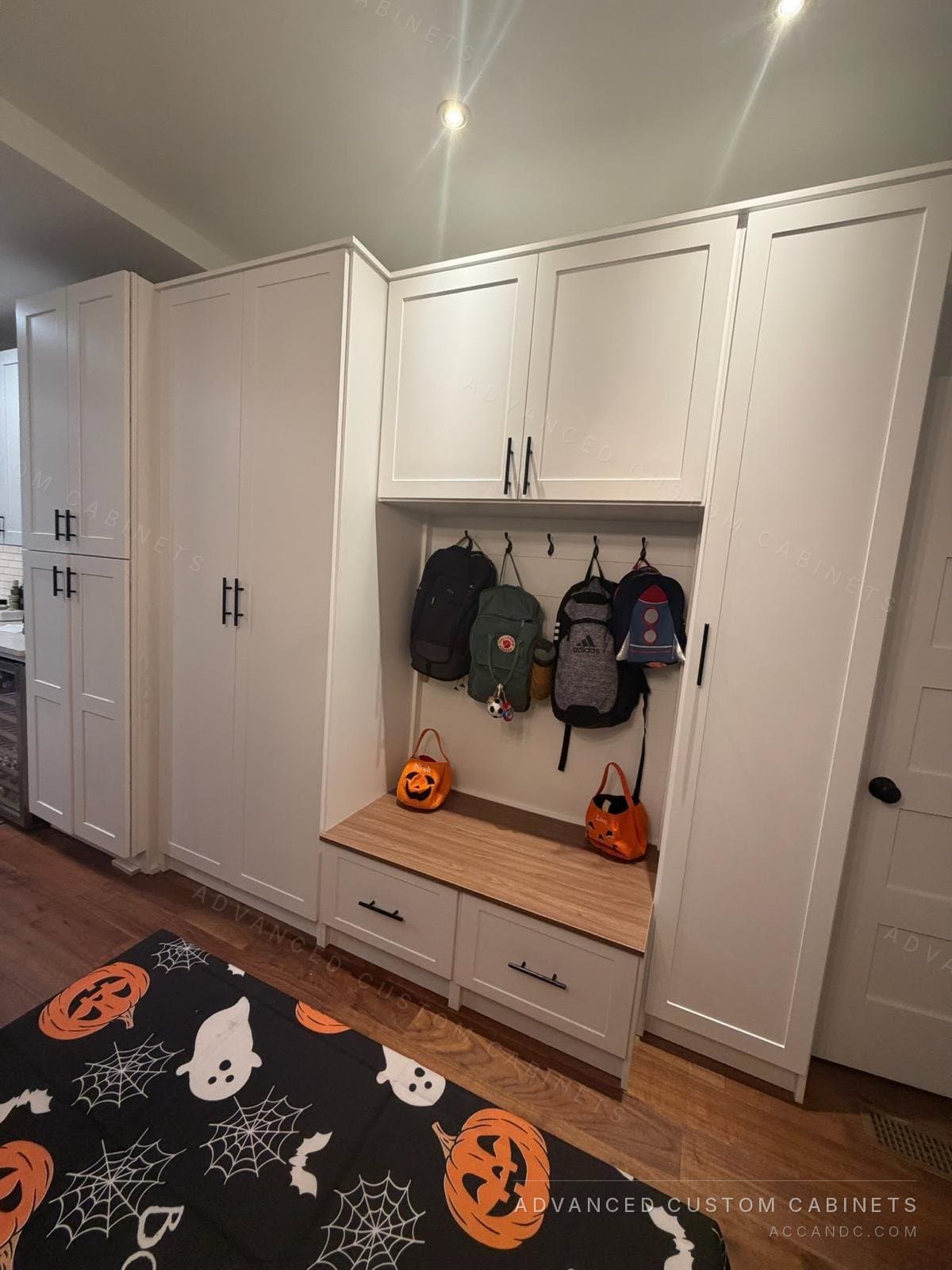
A grid of openings, each 7 to 8 inches wide and 6 to 10 inches tall, one pair per cubby. Cubbies keep a family's shoes sorted by person and are the right answer in a mudroom or a kids' closet, where shoes go in without being lined up. They hold fewer pairs per foot than open shelves, because every divider takes 3/4 of an inch, and they do not adjust once built.
Pull-out shoe trays
Shallow trays on full-extension glides, 20 to 24 inches deep, pulled out to see two rows of shoes at once. They use the depth of a tower that an open shelf cannot, because the back row is reachable, and they keep dust off. The trade-off is cost and the glides, so pull-outs go in a tower in a walk-in, not along an open wall.
The raised shoe shelf
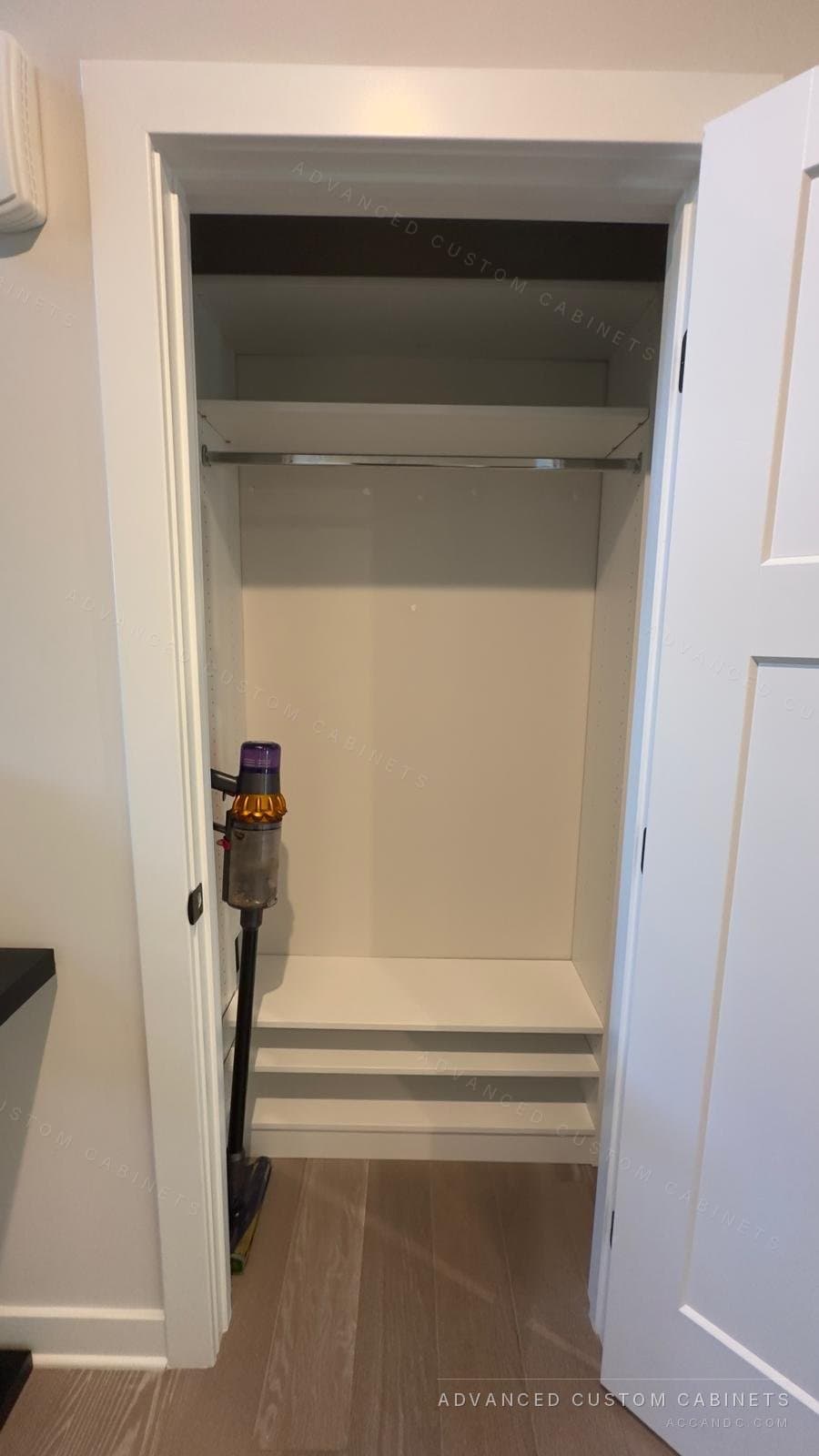
In a reach-in, a two-tier shelf raised off the floor under the hanging rod turns the dead floor of the closet into eight to twelve pairs. The clothes hang above it, the floor under it stays clean, and it costs less than any other shoe storage in the house.
Where the shoes go
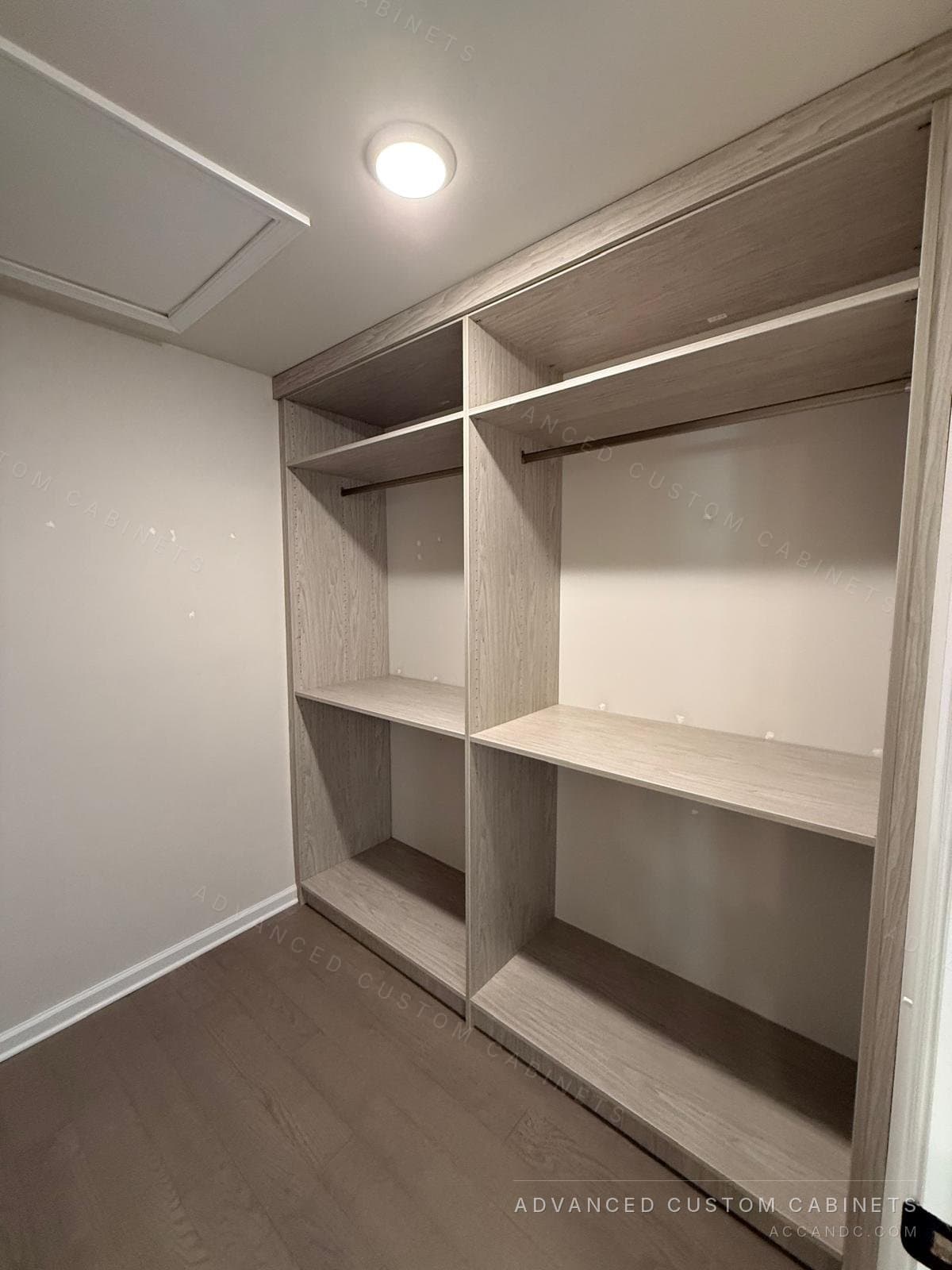
Everyday pairs go low and near the door, between knee and hip height, where they are put on and taken off. Occasional pairs go higher, above the hanging, and seasonal pairs go on the top shelf in boxes. In a walk-in the shoe column is a tower 24 to 36 inches wide on the wall opposite the door or at the end of an island, where it is seen when you walk in and does not steal hanging length from the long walls. In a reach-in the shoes take the floor under the long hang and the bottom of the center tower. Boots that stand up want the lowest shelf or the floor; boots that flop over hang from clips on a low rod or stand with boot shapers.
Shoes by the door
The shoes that never make it to the bedroom closet, boots, sneakers and the kids' everything, belong in the mudroom or the hall closet, in cubbies under a bench or on a boot tray with 16 to 18 inches of clear height. A closet planned without them fills up with them anyway. The mudroom guide covers the bench, the cubbies and the boot tray.
Finishes and keeping it clean
Shoe shelves take grit, so they are laminated board that wipes down, with a 2 mm edge that does not chip when a heel catches it. A dark shelf hides the marks a white one shows; an open shelf dusts in a minute while a cubby grid takes ten. Glass fronts on a shoe tower keep dust off the dress shoes and are lit from inside like any glass-front upper, which is the version that turns a shoe collection into part of the room.
How the planning is done
A designer counts the pairs and measures the longest on a free in-home visit, then draws the shoe tower, shelves and pull-outs into the 3D layout with the rest of the closet. The cabinets are built in our Warminster, PA shop, usually within 2 to 4 weeks, and installed by our own crew, with every closet under a lifetime limited transferable warranty.
Questions people ask
How much space should be between shoe shelves?
6 to 7 inches of clear height for flats and sneakers, 8 to 9 for heels and dress shoes, 9 to 10 for ankle boots and 16 to 18 for tall boots standing up. Adjustable shelves let the spacing follow the shoes you own.
How deep should a shoe shelf be?
12 to 14 inches. A women's size 9 is about 10 1/2 inches long and a men's size 12 just under 13, so closets with men's shoes get 14-inch shelves; angled shelves with a lip are 14 inches.
How many pairs of shoes fit on a shelf?
About one pair per 7 to 8 inches of width: three pairs on a 24-inch shelf, four on 30 inches, five on 36. A tower 30 inches wide with eight shelves holds about 32 pairs.
Are angled or flat shoe shelves better?
Flat shelves hold more pairs and can be reused for bags or sweaters; angled shelves with a lip show every shoe at a glance but cost height and only hold shoes. Most closets use angled shelves at eye level and flat shelves above and below.
Where should shoes go in a walk-in closet?
In a tower 24 to 36 inches wide on the wall opposite the door or at the end of the island, with everyday pairs between knee and hip height, occasional pairs above and seasonal pairs on the top shelf. Tall boots take the floor or hang from clips on a low rod.