Count the people, then measure the wall
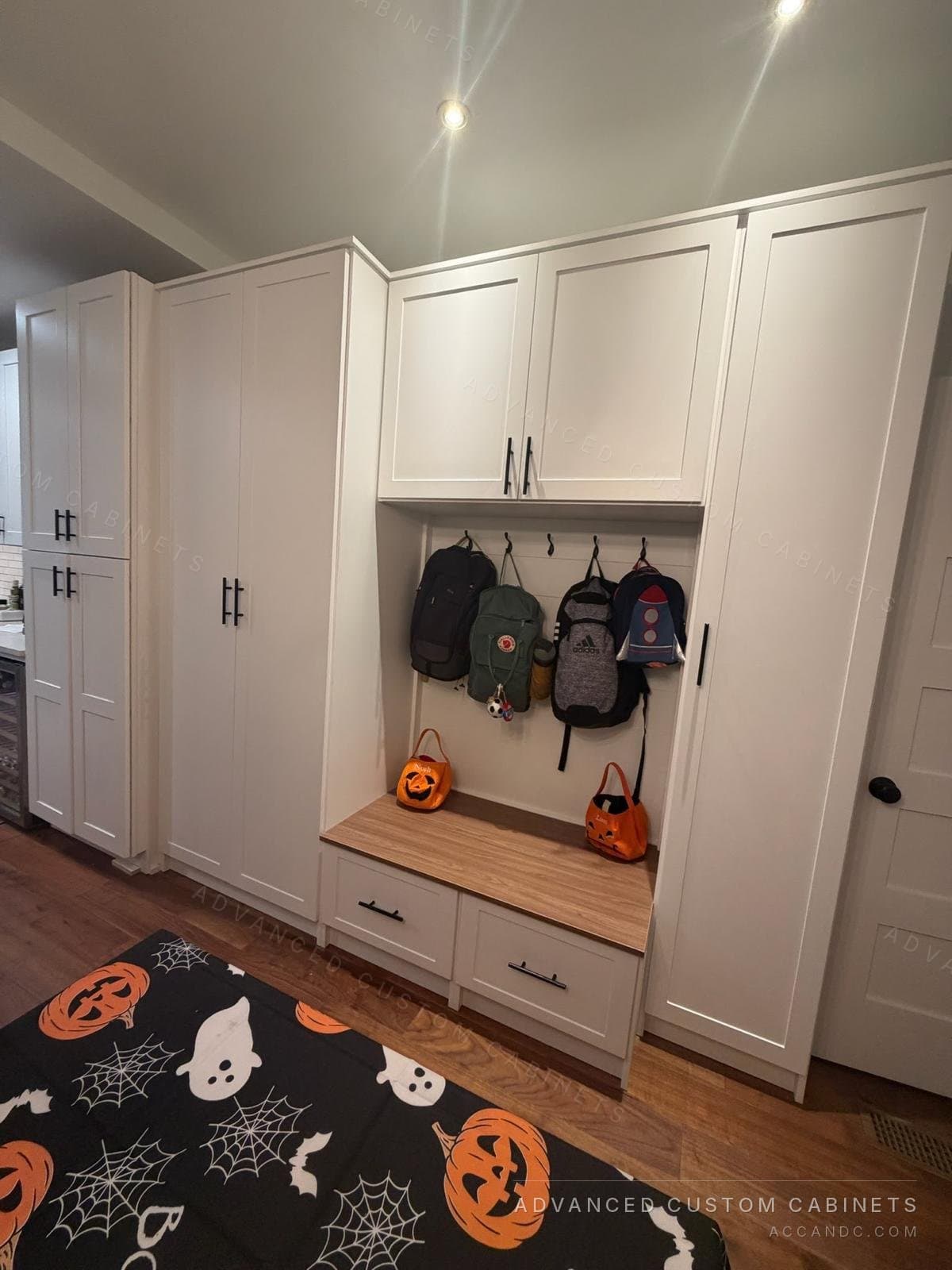
A mudroom is planned per person, not per wall. Each adult needs a locker 15 to 18 inches wide; a child manages with 12 to 15 inches until the winter coats arrive. Add the guest hooks and the dog, and a family of four wants 6 to 7 feet of wall. If the wall is shorter, the lockers give way to a shared bench with two rows of hooks above it, which holds the same coats in less width at the cost of everyone's things touching.
- Measure the wall from corner to door casing, the ceiling height, and the height of any window sill or thermostat on that wall.
- Note which way the door swings. A locker behind an inward-swinging door is a locker nobody uses.
- Find the outlets. One inside the run becomes the charging drawer; one in the way of a bench gets moved by the electrician before install day.
- Check the floor. Tile, stone and salt-stained laminate all take floor-mounted cabinets, but a heating vent or a floor drain fixes where a cabinet cannot stand.
The bench
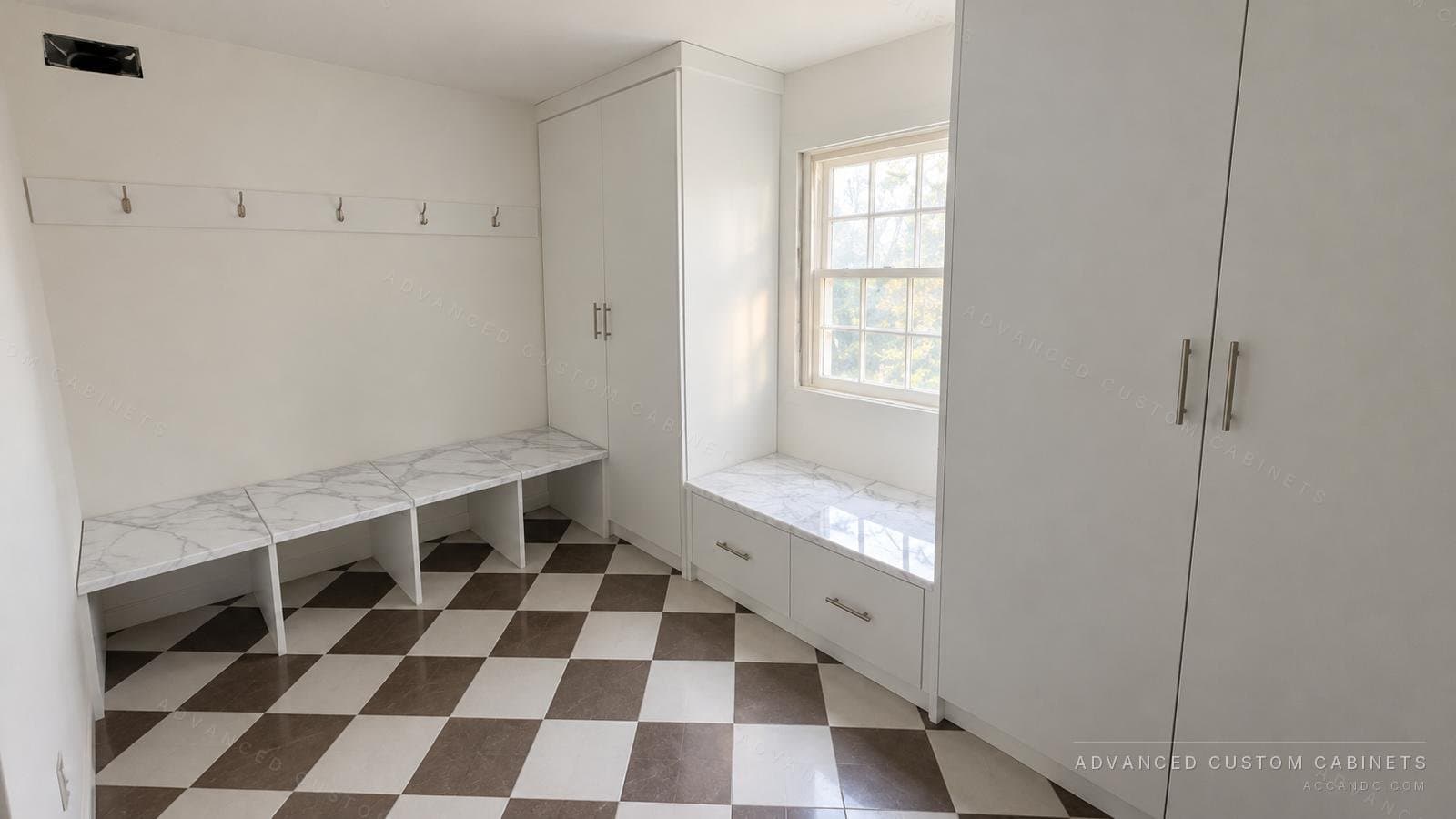
A bench you can actually sit on is 18 inches high and 16 to 18 inches deep, with 15 to 18 inches of width per person who sits at the same time. Leave 36 inches of clear floor in front of it, because a bench with a wall 24 inches away is a step, not a seat. Under the bench the choice is drawers, open cubbies for shoes, or a lift-up seat over a bin; drawers are the tidiest, cubbies the fastest, the bin the cheapest to fill and the hardest to keep sorted.
A wood top on the bench takes the wet boots better than a painted one and is easy to wipe; a cushion goes on top of a seat that is used for more than lacing shoes. On a short wall, a 36 inch bench between two tall cabinets looks built in and seats two.
Hooks: two rows, two heights
Adult coat hooks go 60 to 66 inches off the floor so a long coat clears the bench. Children's hooks go on a second row at 36 to 48 inches, and that row moves up as they grow if it is a hook rail rather than a hook screwed into the panel. Space hooks 6 to 8 inches apart on a rail, two hooks per person, and use double hooks where the bag and the coat share a locker. Hook height and locker width are set for the people who will use them, which is the whole reason a mudroom is built rather than bought.
Shoe cubbies and boot trays
Shoes are the thing that defeats most mudrooms. Plan 4 to 6 pairs per person in the room and the rest in the bedroom closets. A cubby 12 to 14 inches wide and 6 to 8 inches tall takes a pair of shoes; boots need 14 to 16 inches of height, and a tall boot section at the end of the run keeps them standing instead of folded. Removable trays or boot mats in the cubbies catch water and salt and go to the sink in March; without them the salt sits on the cabinet floor all winter.
Angled shoe shelves behind a locker door show the shoes and keep them off each other. Open cubbies under the bench are quicker for small children, who will not open a door to put a shoe away but will push it into a hole.
Upper cabinets and the top shelf
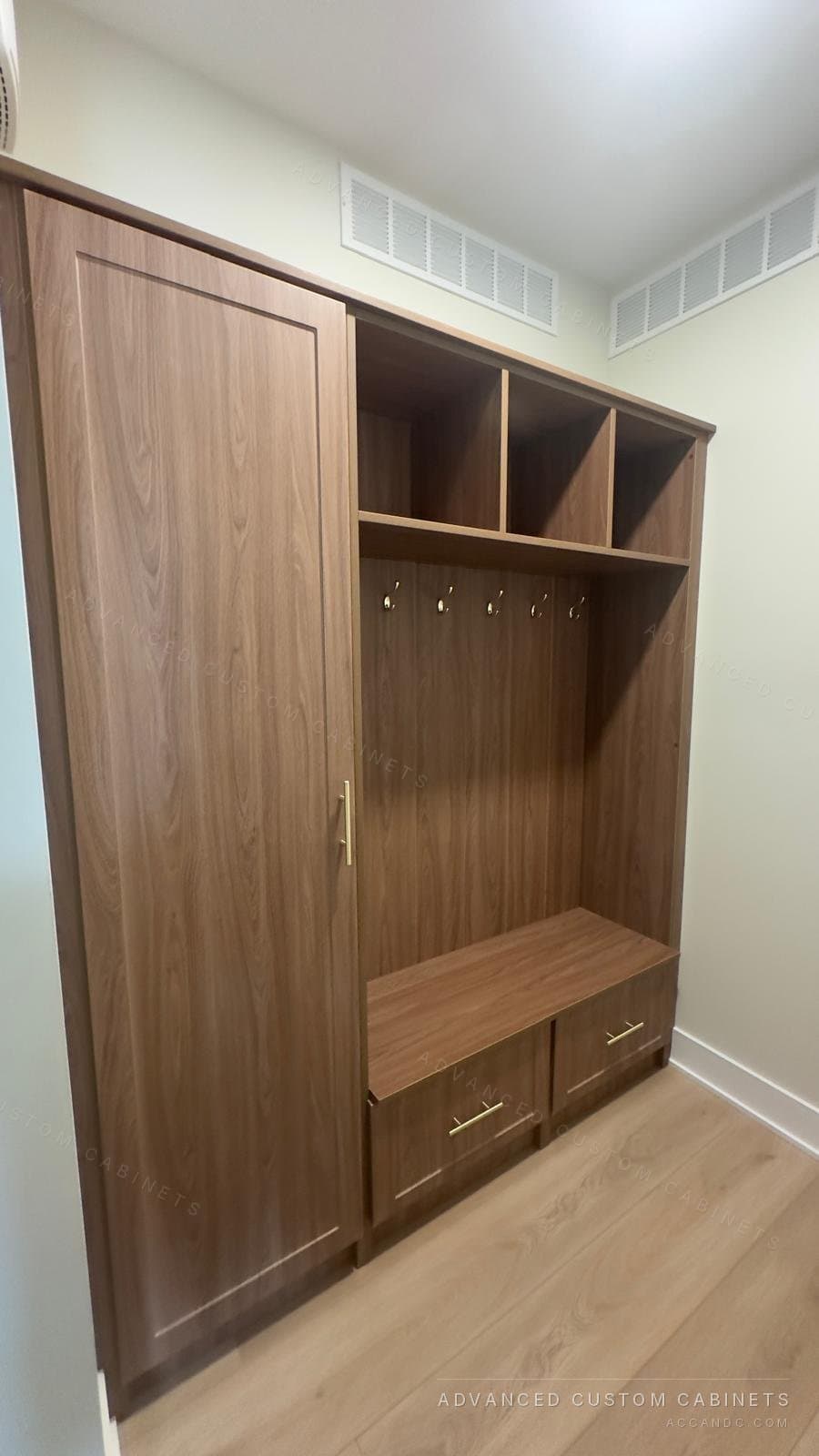
Above the hooks, an upper cabinet 12 to 14 inches deep starts at 72 to 78 inches from the floor, high enough that a hanging coat does not catch its bottom edge, and runs to the ceiling. This is the off-season cabinet: hats and gloves in baskets at the front, the ski jackets at the back. Between the hooks and the upper, an open shelf at 66 to 70 inches holds the things that go out with you, the dog leash and the sunglasses, where you see them on the way past.
Doors or open lockers
Open lockers are fast and show the mess; closed lockers hide it and need 18 to 24 inches of door swing in front of them, which a narrow hall does not have. Most rooms land in between: open hooks and cubbies at the level where things get grabbed, doors on the uppers and the bench drawers. Lockers can be closed with doors where the family prefers a wall of cabinets to a row of coats, and a finished back panel behind open hooks makes the open version look built rather than hung.
The drop zone
A drop zone is a counter at 36 inches, or a shelf at the same height, with a drawer below it for keys, mail and the dog's things. The useful version has an outlet inside the cabinet or the drawer, so the phones charge out of sight and the cords stay in the mudroom. The outlet is the electrician's job and is planned on the drawings before the cabinets are built, because moving it afterwards means pulling a finished panel.
Finishes that survive salt and boots
A mudroom cabinet gets kicked, dripped on and wiped with a wet cloth more than any other cabinet in the house. Laminated three-quarter inch board with a 2 mm PVC edge wipes clean and does not swell or peel where boots drip against it. Darker wood grains hide scuffs; whites show every mark but match a white hall. The cabinets are floor-mounted, anchored to the floor and secured to the wall, so a bench full of children does not move.
Small mudrooms, hallways and the garage door
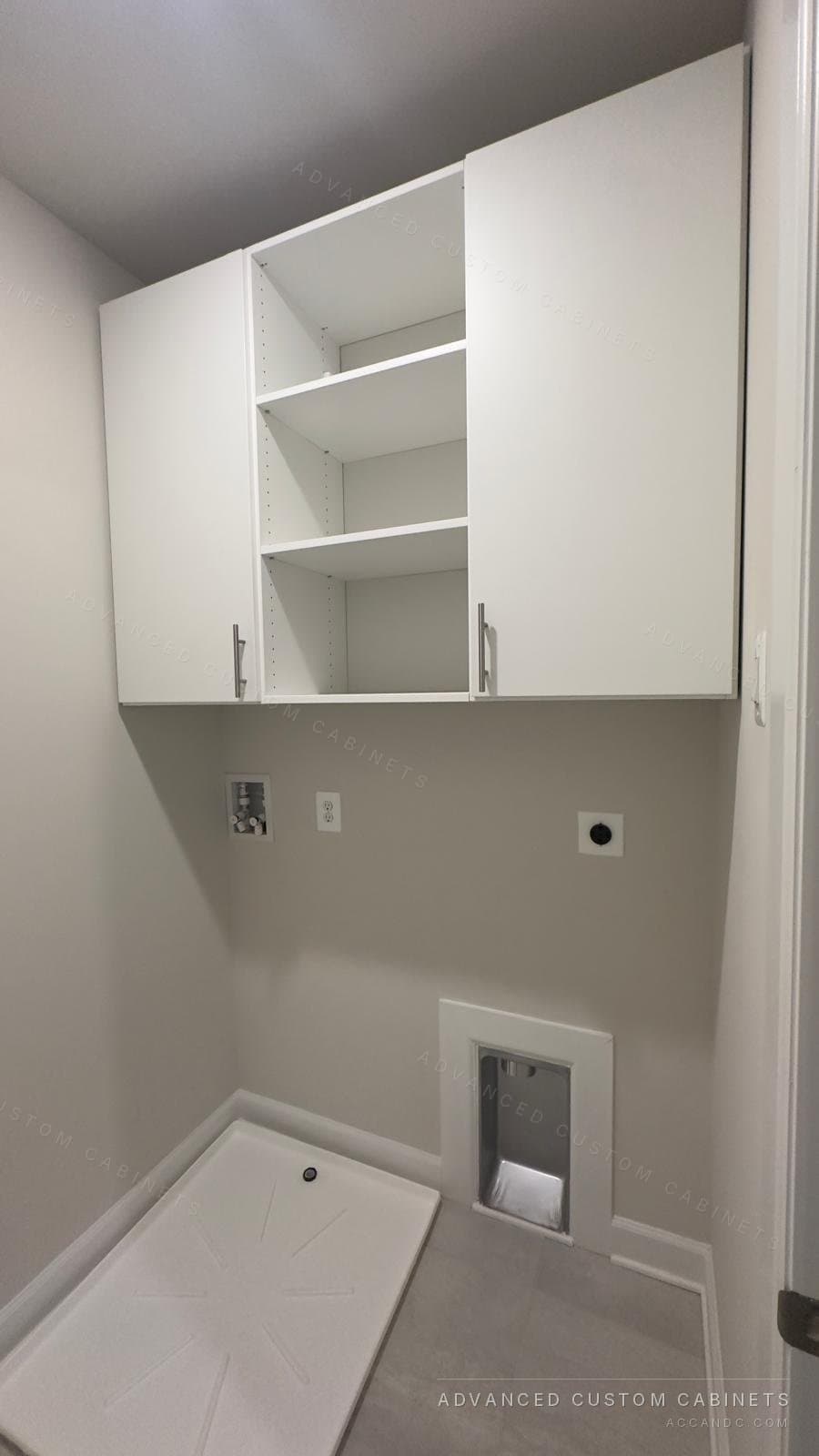
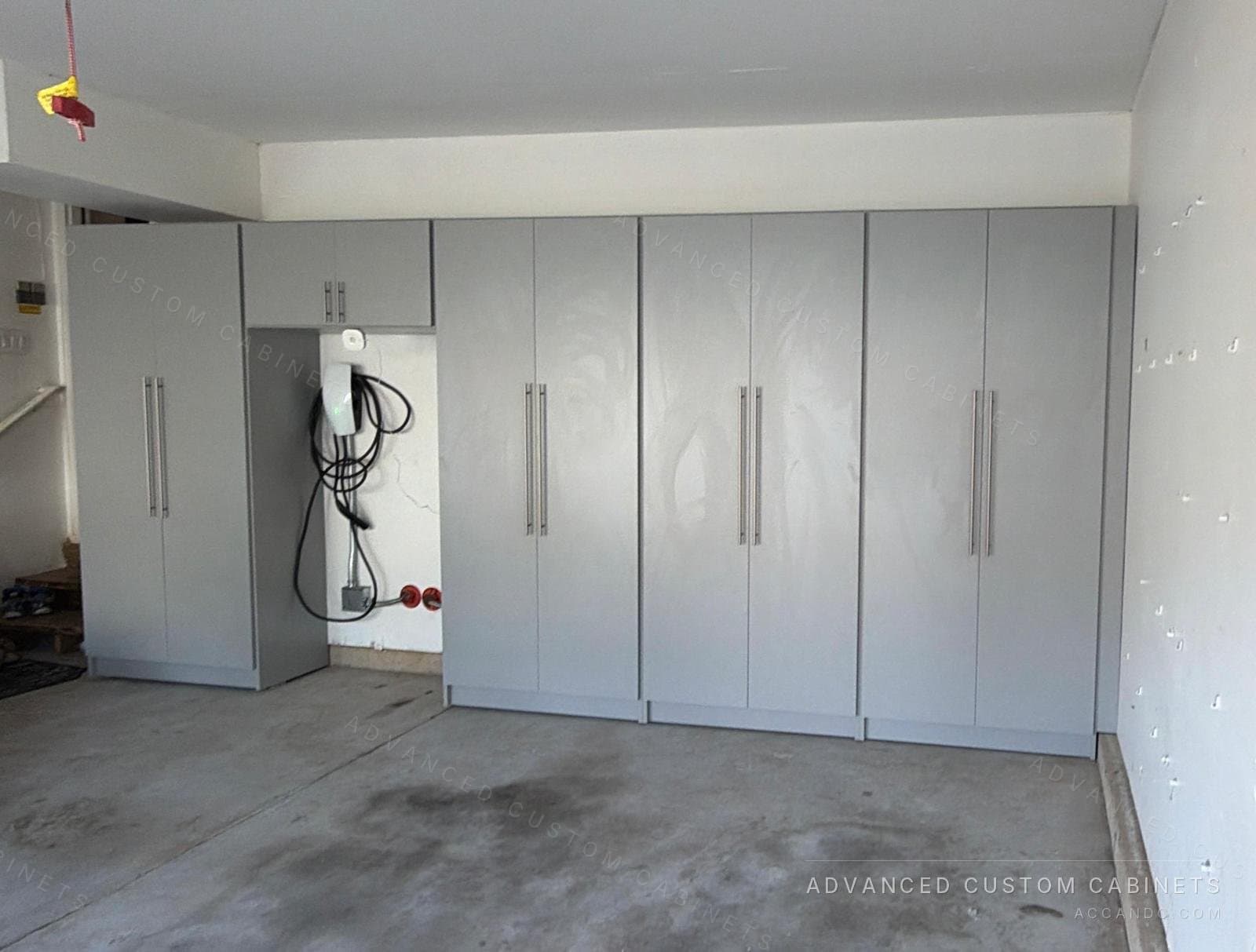
A 4 or 5 foot wall by the back door fits a bench with cubbies, a hook rail and one upper, which is most of a mudroom. A single tall locker 24 inches wide beside the garage door holds two people's coats and shoes. A hall closet turned into a mudroom loses its door and gains a bench, hooks and an upper in the 24 inch depth it already has. Where the laundry is by the back door, the two rooms are planned together; the laundry room cabinets guide covers the machines side of that wall.
How the planning is done
A designer measures the wall, the door swing and the outlets on a free in-home visit and sketches options on the spot. The lockers and bench are drawn in 3D for the people who will use them, built in our Warminster, PA shop and installed in a single day by our own crew. Every cabinet carries a lifetime limited transferable warranty.
Questions people ask
How wide should a mudroom locker be?
Fifteen to 18 inches per adult and 12 to 15 inches per child. A family of four with guest hooks needs 6 to 7 feet of wall; a shorter wall gets a shared bench with two rows of hooks instead of lockers.
How high should a mudroom bench be?
Eighteen inches high and 16 to 18 inches deep, with 36 inches of clear floor in front of it so you can sit and reach your shoes.
How high do you hang coat hooks in a mudroom?
Sixty to 66 inches for adults, so a long coat clears the bench, and a second row at 36 to 48 inches for children. Space hooks 6 to 8 inches apart, two per person.
Should mudroom lockers have doors?
Doors hide the mess and need 18 to 24 inches of swing in front of the locker. Most rooms mix open hooks and cubbies with doors on the uppers and the bench drawers; a finished back panel makes open lockers look built in.
Can you put an outlet inside a mudroom cabinet?
Yes. A drop zone with an outlet inside the cabinet or a drawer charges phones out of sight. The electrician places it from the drawings before the cabinets are installed.