The numbers at a glance
| Element | Dimension | Notes |
|---|---|---|
| Bench seat height | 17 to 19 in | 18 in is the chair standard; 16 in where small children use it most |
| Bench seat depth | 16 to 20 in | 18 in to sit and tie shoes; 20 in if it is also a drop zone for bags |
| Bench length per person | 18 to 24 in | Two people side by side need 36 to 42 in |
| Locker width, child | 12 to 15 in | A coat on a hook is 12 in wide; two coats need 15 |
| Locker width, adult | 16 to 18 in | 20 to 24 in with a door |
| Locker depth | 14 to 18 in | 16 in holds a coat on a hook without the sleeves catching the sides |
| Hook height, adult | 60 to 66 in | Second row at 70 to 72 in for the long coats |
| Hook height, child | 36 to 48 in | Raised a few inches every couple of years on adjustable rails |
| Upper cabinet | 12 to 14 in deep, 12 to 15 in tall | Bottom at 72 to 78 in, top at the ceiling |
| Shoe cubby | 7 to 8 in wide, 6 to 10 in tall | One pair per cubby, under the seat |
| Boot tray space | 16 to 18 in clear | Open under the bench, no cubby dividers |
The bench
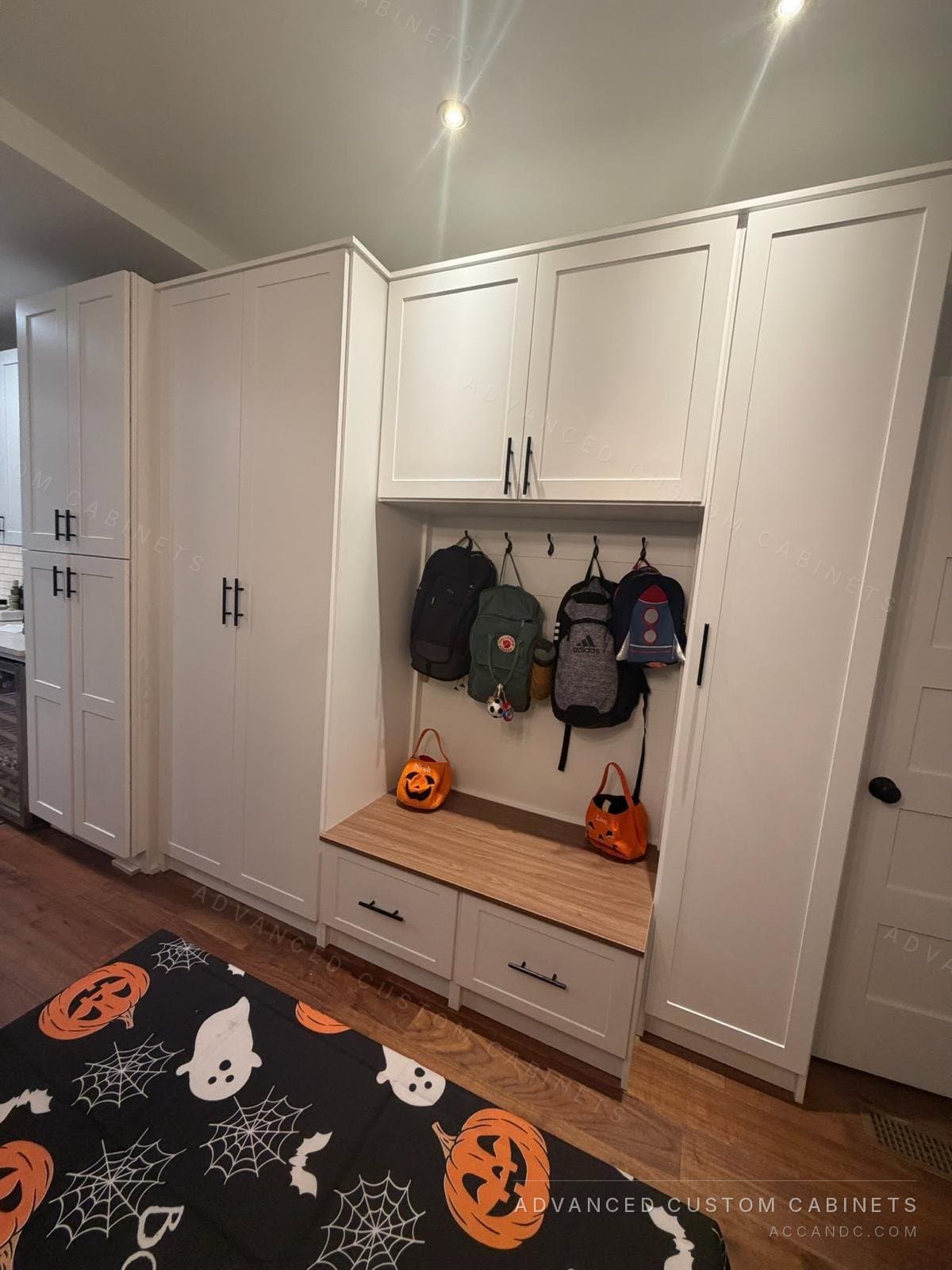
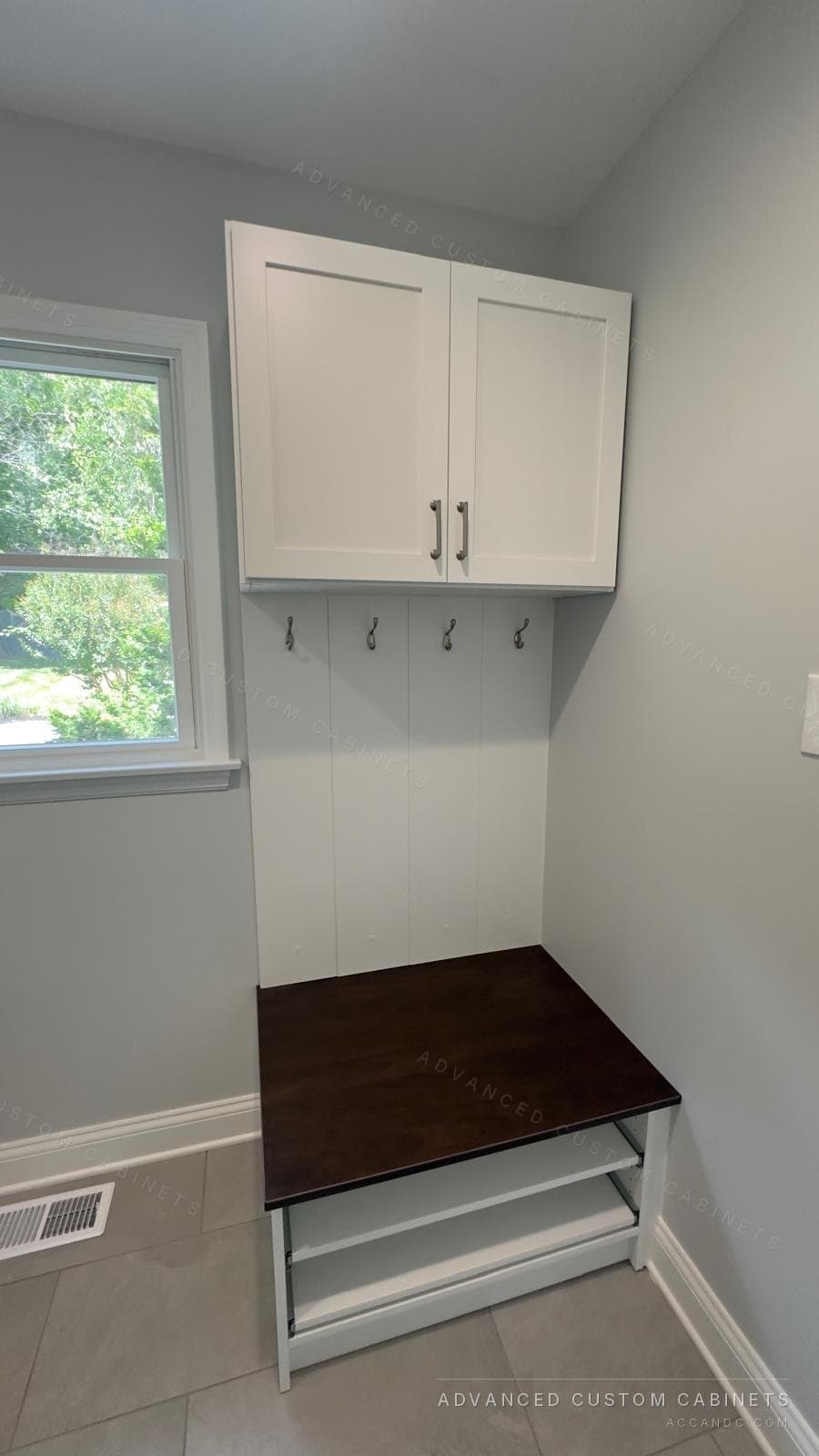
The seat is 17 to 19 inches from the floor, the height of a dining chair, which is where an adult can sit to tie a shoe and a six-year-old can climb up; a family with toddlers sometimes drops it to 16. Depth is 16 to 20 inches: 16 is a perch, 18 is a seat, 20 is a seat with room for the backpack beside you. The top is a solid wood or a laminated board thick enough not to flex, 1 to 1 1/2 inches, with a 1-inch overhang at the front so knees clear the storage below. A cushion adds 2 to 3 inches, so a bench that gets one is built an inch or two lower.
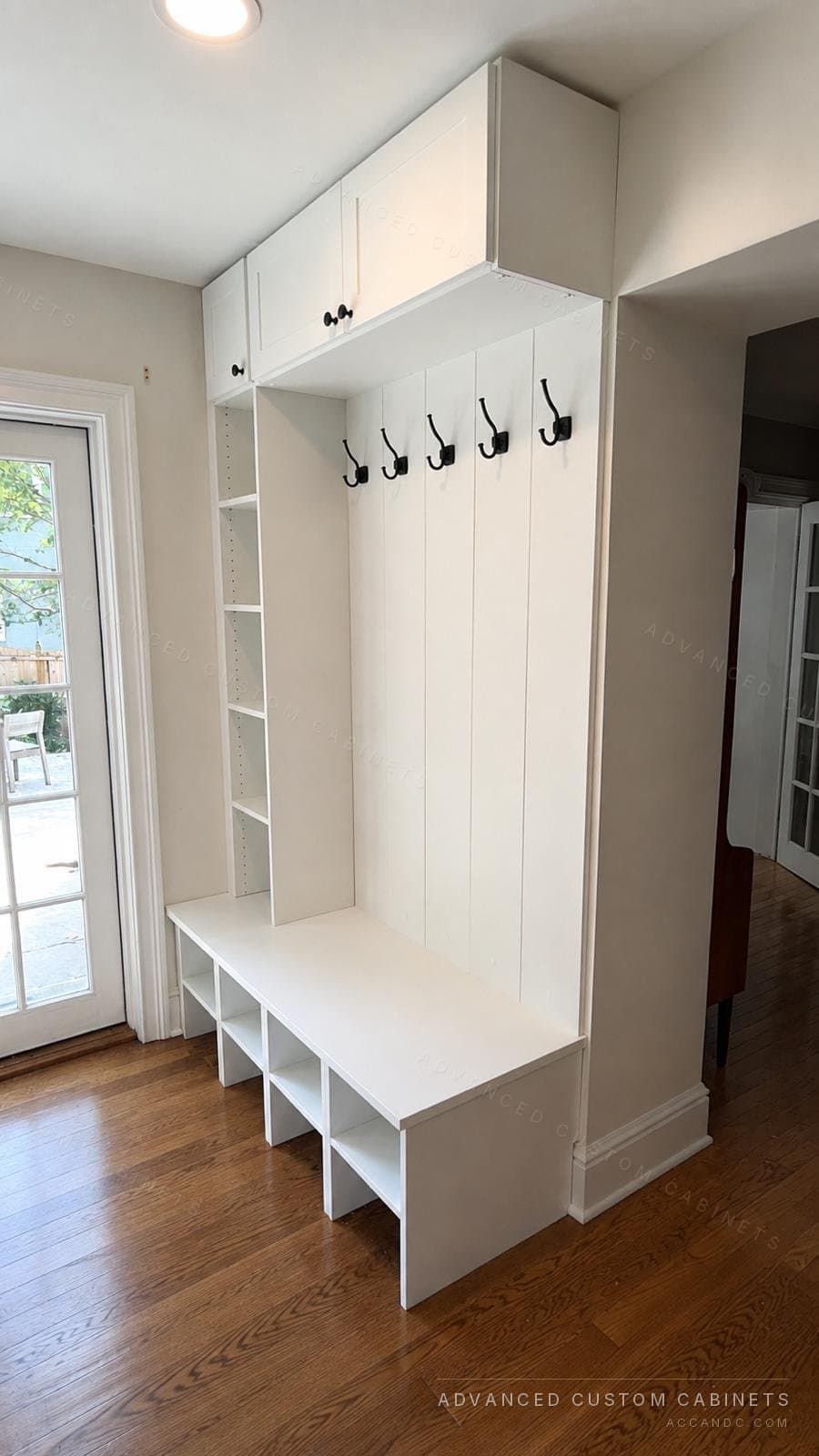
What is under the seat decides how the room is used. Drawers on full-extension glides, 6 to 8 inches tall, take hats, gloves and dog leads and are the version that stays tidy, because things go in without lifting a lid. Open cubbies 7 to 8 inches wide take a pair of shoes each and are sorted by person. An open space with a boot tray, 16 to 18 inches clear, is for the wet boots that should not be in a cubby. A lift-up seat with a bin inside holds the most but is used the least, because the cushion and the child sitting on it are in the way; it belongs on a window seat, not a mudroom bench.
Locker width: one bay per person
A coat hanging on a hook is about 12 inches wide at the shoulders, so an open locker for a child is 12 to 15 inches wide and holds one coat and a backpack on a second hook. An adult's locker is 16 to 18 inches, two coats side by side. Lockers with doors need 20 to 24 inches, because the door takes 3/4 of an inch on each side and a coat behind a door needs room to be pulled out without the hooks catching the stiles. Locker depth is 14 to 18 inches, measured from the back panel to the front face: at 14 the sleeves of a parka rub the dividers, at 16 they do not, at 18 the bench in front of the locker gets its full seat depth. The vertical dividers between lockers are the frame that holds the hooks and the upper cabinet, so they run from the bench top to the upper and are 3/4-inch board like the rest.
Hooks: two rows, two heights
Adults' hooks sit at 60 to 66 inches, where a coat hangs without touching the bench. A second row at 70 to 72 inches takes the long coats and the things that are hung and forgotten. Children's hooks go at 36 to 48 inches, on a rail that is moved up as they grow, which is the one adjustment a mudroom gets every couple of years. Each locker gets two or three hooks, a double hook for the coat and the bag and a single for the hat; heavy-gauge hooks screwed through the back panel into the divider, not into the panel alone, because a wet coat and a loaded backpack weigh 15 pounds.
The upper cabinet and the top shelf
Above the hooks, a cabinet 12 to 14 inches deep with its bottom at 72 to 78 inches and its top at the ceiling takes the seasonal things: the sunhats in winter, the scarves in summer, the sports gear between seasons. Doors keep the view calm; an open shelf at the same height is cheaper and used more, and is the better choice for a mudroom that is behind a door. Under an 8-foot ceiling the upper is 12 to 18 inches tall; under 9 feet it is 24, or it is two shelves. The upper is secured to the studs and to the dividers below it, so the whole wall is one piece.
Three worked layouts
A 5-foot wall, two people
Sixty inches: two open lockers 18 inches wide with a 24-inch tall cabinet at one end for the vacuum and the long coats, or three 20-inch lockers with no tall cabinet. A bench runs the full 60 inches at 18 inches high and 18 deep, with four shoe cubbies and an open boot bay under it, and an upper cabinet the full width.
A 6-foot wall, three people
Seventy-two inches: three lockers at 24 inches, or four at 18 if the fourth is for guests. The bench is 72 inches with drawers under the two end bays and cubbies under the middle one. Hooks at 64 inches in the adults' lockers and 42 in the child's, on a rail. The upper cabinet runs the width with doors over the adults' bays and an open shelf over the child's.
An 8-foot wall, four people
Ninety-six inches: four lockers at 20 inches with a 16-inch tall cabinet at one end, or four at 24 with no tall cabinet. The bench is 80 to 96 inches, which seats three while the fourth stands; drawers under two bays, cubbies under two. Two rows of hooks for the adults and the adjustable rail for the children. This is the layout that takes a family through to the teenagers without being rebuilt.
When the wall is short
A wall under 5 feet gets one of two things: a bench with hooks above it and an upper, no dividers, which is a locker wall without the lockers; or a tall cabinet 24 inches wide beside a 30-inch bench, when the coats need a door. A hallway 42 inches wide keeps the bench to 14 inches deep so the aisle stays at 28, and puts the shoes in cubbies under it rather than on the floor. The planning guide below covers these small rooms, the finishes that survive salt, and the drop zone with the charging drawer.
What a bench-and-locker wall costs
A mudroom with a bench, hooks and open lockers starts around $1,500, and one with doors on the lockers, drawers under the bench and uppers to the ceiling from about $2,500; more people and more wall move the figure up. The cabinets are 3/4-inch laminated board in 25 colors in stock, with a wood or laminated bench top, soft-close hardware and full-extension glides on the drawers.
How the planning is done
A designer measures the wall on a free in-home visit, asks who uses the door and how tall they are, and draws the bench and lockers in 3D with every dimension above. The cabinets are built in our Warminster, PA shop, usually within 2 to 4 weeks, and installed by our own crew, with a lifetime limited transferable warranty.
Questions people ask
How high should a mudroom bench be?
17 to 19 inches from the floor, the height of a dining chair; 16 inches where small children use it most. A cushion adds 2 to 3 inches, so a bench that gets one is built lower.
How deep should a mudroom bench be?
16 to 20 inches. 18 inches is enough to sit and tie shoes; 20 gives room for a bag beside you; 14 is the limit in a narrow hallway where the aisle matters more.
How wide should a mudroom locker be?
12 to 15 inches for a child, 16 to 18 for an adult, 20 to 24 if the locker has a door. Depth is 14 to 18 inches; at 16 a parka hangs without rubbing the dividers.
How high should mudroom hooks be?
60 to 66 inches for adults with a second row at 70 to 72 for long coats, and 36 to 48 inches for children on a rail that moves up as they grow.
How many lockers fit on a 6-foot wall?
Three at 24 inches, or four at 18. With a tall cabinet at one end for long coats, three lockers at 18 to 20 inches beside a 24-inch cabinet.