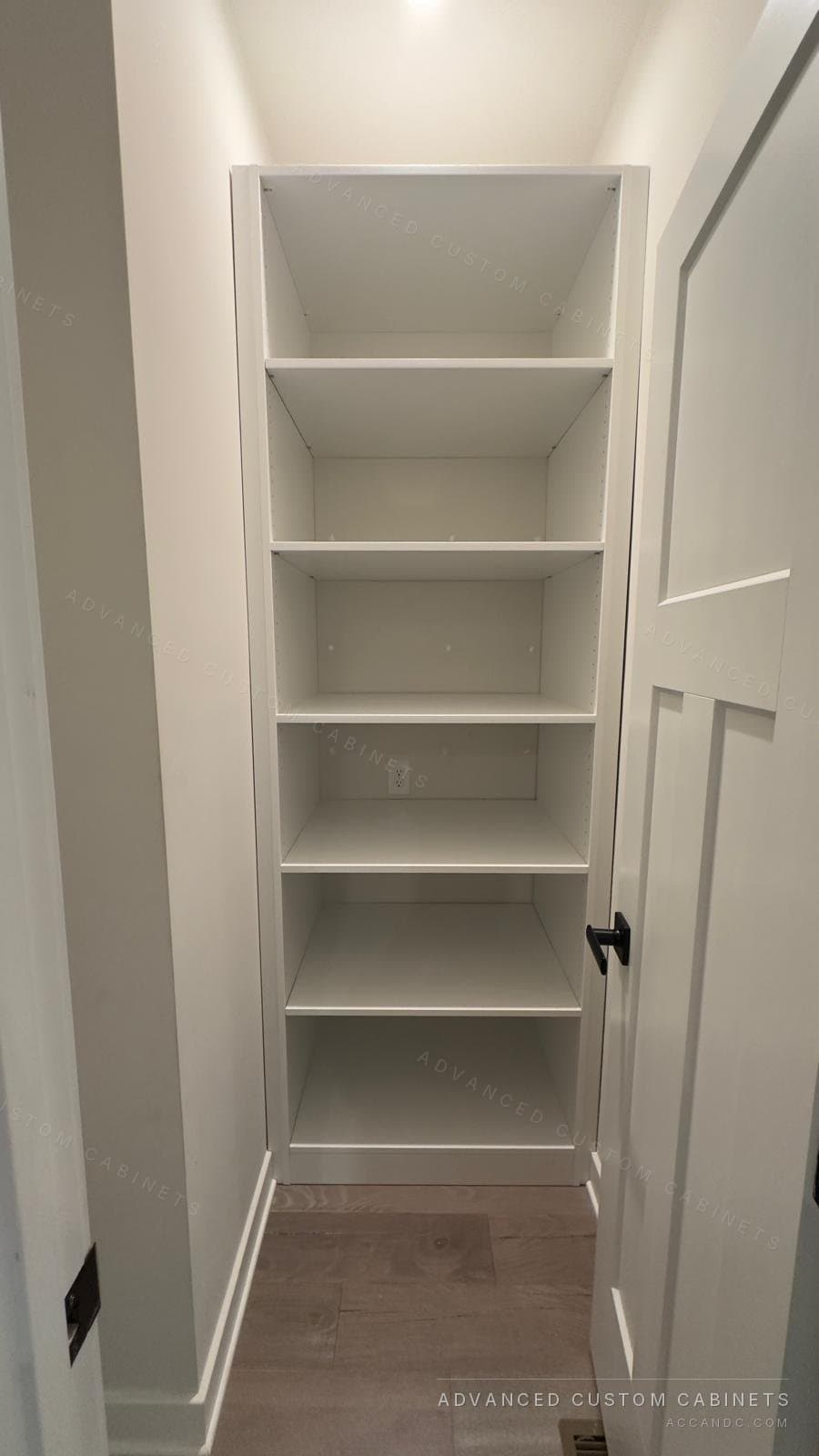
What a linen closet holds, in inches
A bath towel folded in thirds and then in half is about 10 by 14 inches and 3 inches thick; a stack of four stands a foot high. A queen sheet set folded flat is 12 by 14 inches and 4 inches thick. A folded blanket is 18 to 24 inches wide and a comforter needs 20 by 24 inches and a foot of height, which is why comforters never fit on a wire shelf meant for towels. Add the backstock (paper goods, soap, shampoo), the cleaning supplies and the vacuum, and the closet has to store five kinds of things at five different sizes. Shelves of one depth at one spacing cannot do it; that is the whole problem.
Shelf depth: 14 to 16 inches, not 12 and not 24
Builder wire shelving is 12 inches deep, 2 inches short of a folded towel, so the stacks hang over the edge and lean. The right depth for towels and sheets is 14 to 16 inches: the stack sits fully on the shelf with an inch to spare. The top shelf, for blankets and comforters, wants 18 to 20 inches. A hall closet is usually 24 inches deep, and the 8 inches behind a 16-inch shelf is where things disappear, so either the shelves stop at 16 and the back wall gets a shallow rail for the ironing board and the step stool, or the lower shelves become pull-outs that bring the back of the closet to you.
| What | Shelf depth | Shelf spacing | Where in the closet |
|---|---|---|---|
| Bath and hand towels | 14 to 16 in | 10 to 12 in | Eye level, 48 to 66 in from the floor |
| Sheet sets | 14 to 16 in | 12 to 14 in | Just above or below the towels |
| Blankets, comforters, pillows | 18 to 20 in | 16 to 18 in | Top shelf, above 72 in |
| Toiletries and backstock | 12 to 14 in, or a drawer | 8 to 10 in | Waist height, 30 to 42 in |
| Cleaning supplies, vacuum | Full depth | 24 to 36 in clear | Floor, with the bottom shelf at 24 to 36 in |
Shelf spacing by what sits on it
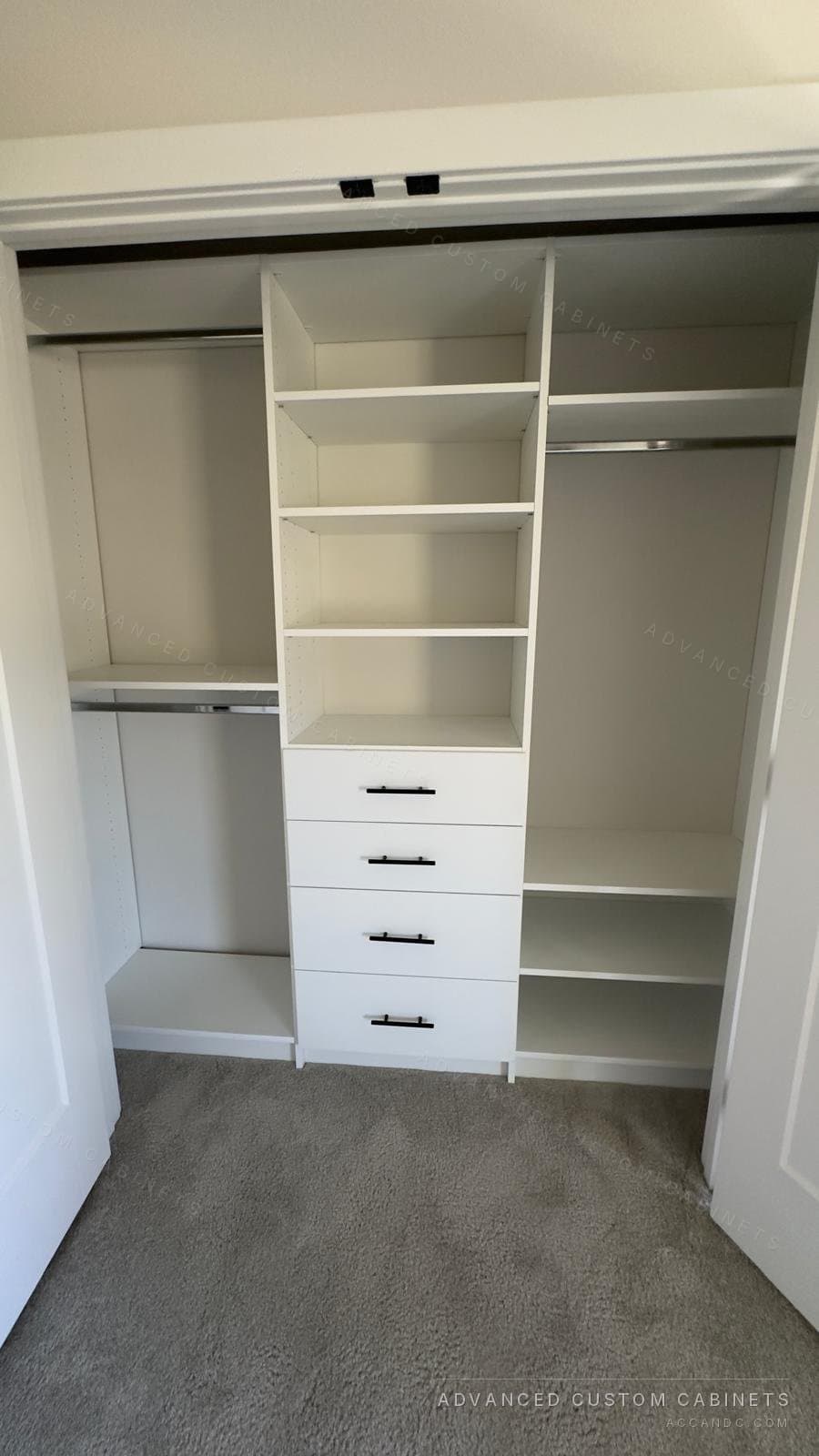
Towels stack neatly to about a foot, so 10 to 12 inches between shelves gives one stack of four per shelf and no leaning tower; sheets want 12 to 14 inches; blankets 16 to 18. Toiletries are short, so 8 to 10 inches between shelves at waist height doubles what that section holds, and a shallow drawer does the same job better. The bottom shelf sits 24 to 36 inches off the floor to leave room under it for the vacuum and a bucket. Fixed shelves cannot do all of this at once; shelves that adjust in 1 1/4-inch steps can, and they move again when the family's linens change.
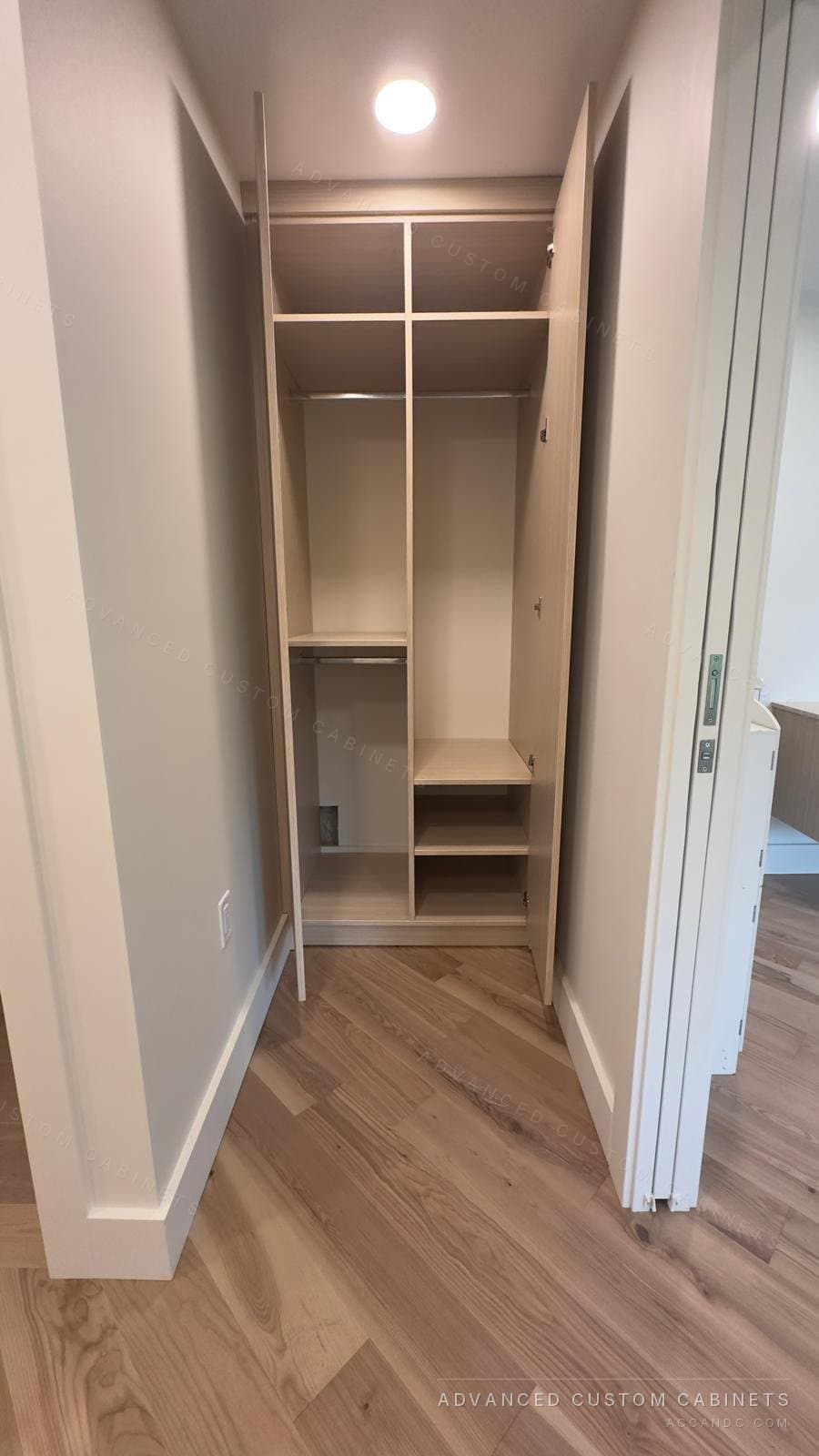
A zone plan for a standard hall closet
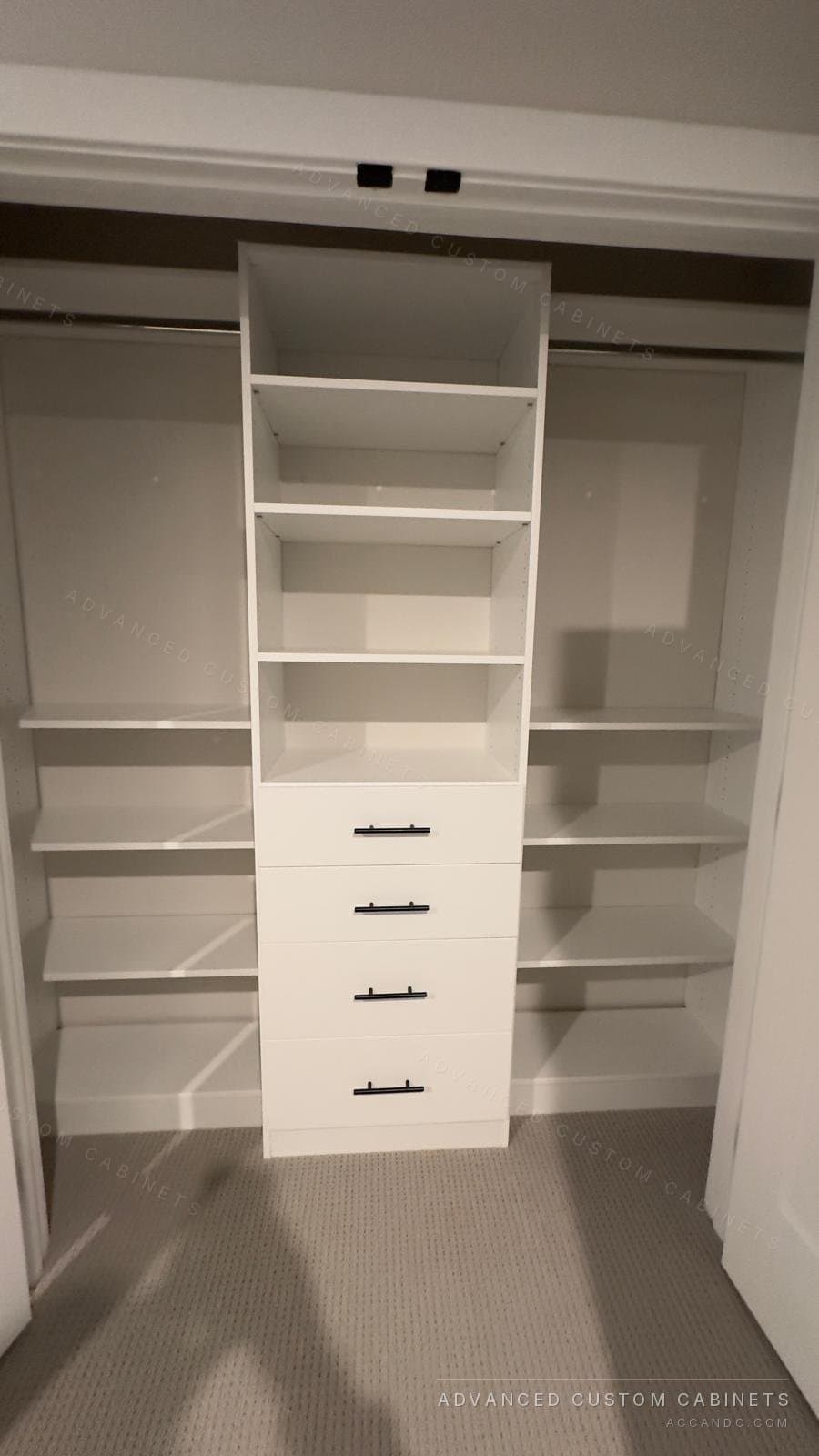
Put the things you touch every week between 48 and 66 inches, where you see them without bending or reaching: bath towels, hand towels, the sheets for the beds that get changed. The top shelf, above 72 inches, takes the things you touch twice a year: guest blankets, the extra pillows, the beach towels in January. Waist height, 30 to 42 inches, is for toiletries and backstock, in a drawer or on shallow shelves, because that is where you look for a new bar of soap at 7 in the morning. The floor and the bottom 30 inches hold the vacuum, the mop and the bucket, with the bottom shelf high enough that the vacuum handle clears it.
- One stack per shelf section, one kind per stack: bath towels, hand towels and washcloths each get their own column.
- Fold a sheet set inside one of its pillowcases so the set stays together and the stack stays flat.
- One shelf per bedroom for sheets, labeled on the shelf edge, so the twin sheets stop ending up on the king bed.
- Baskets or bins for the small things: travel bottles, first-aid, spare toothbrushes. A basket is a drawer you can lift out.
- Keep 20 percent of every shelf empty. A linen closet packed to the edge is reorganized within a month, badly.
The deep hall closet: pull-outs and two rows
When the closet is 24 inches deep and the door is narrow, the lower section works best as pull-out shelves or wire baskets on full-extension glides: the whole 24 inches comes out into the hall and nothing hides at the back. Above waist height, where you can see in, fixed shelves at 16 inches with a rail or hooks on the back wall behind them use the depth without losing anything. The door itself takes a rack for the ironing board or a row of hooks for the dusters and the lint roller.
No linen closet: the bathroom linen cabinet and the hallway tower
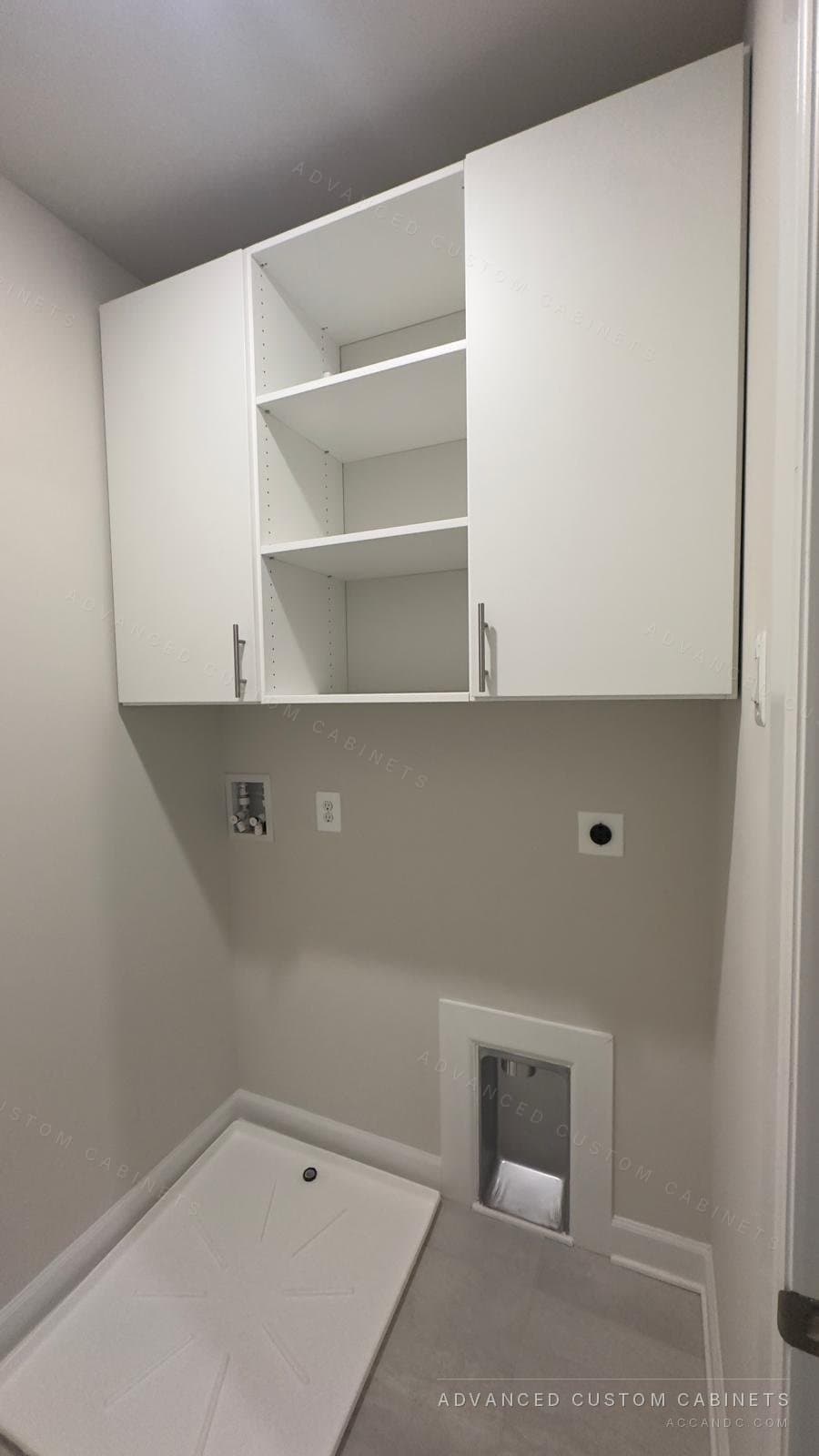
Many older homes in the Philadelphia area, and most apartments, have no linen closet at all, and the towels live in the bathroom vanity or on a shelf over the toilet. Three built-in options replace it. A bathroom linen cabinet is a tall cabinet 18 to 24 inches wide, 12 to 16 inches deep and 84 inches high, with doors on the top two thirds and a drawer or open shelf below for the things in daily use; at 12 inches deep it fits beside a vanity or behind a door where a closet never could. A hallway linen tower is the same cabinet built into an alcove or standing at the end of the hall, finished to look like furniture, and it holds the household's linens where the bathrooms can all reach them. A linen section inside the laundry room cabinets, 16 inches deep with the towel shelves at eye level, puts the clean linens where they come out of the dryer.
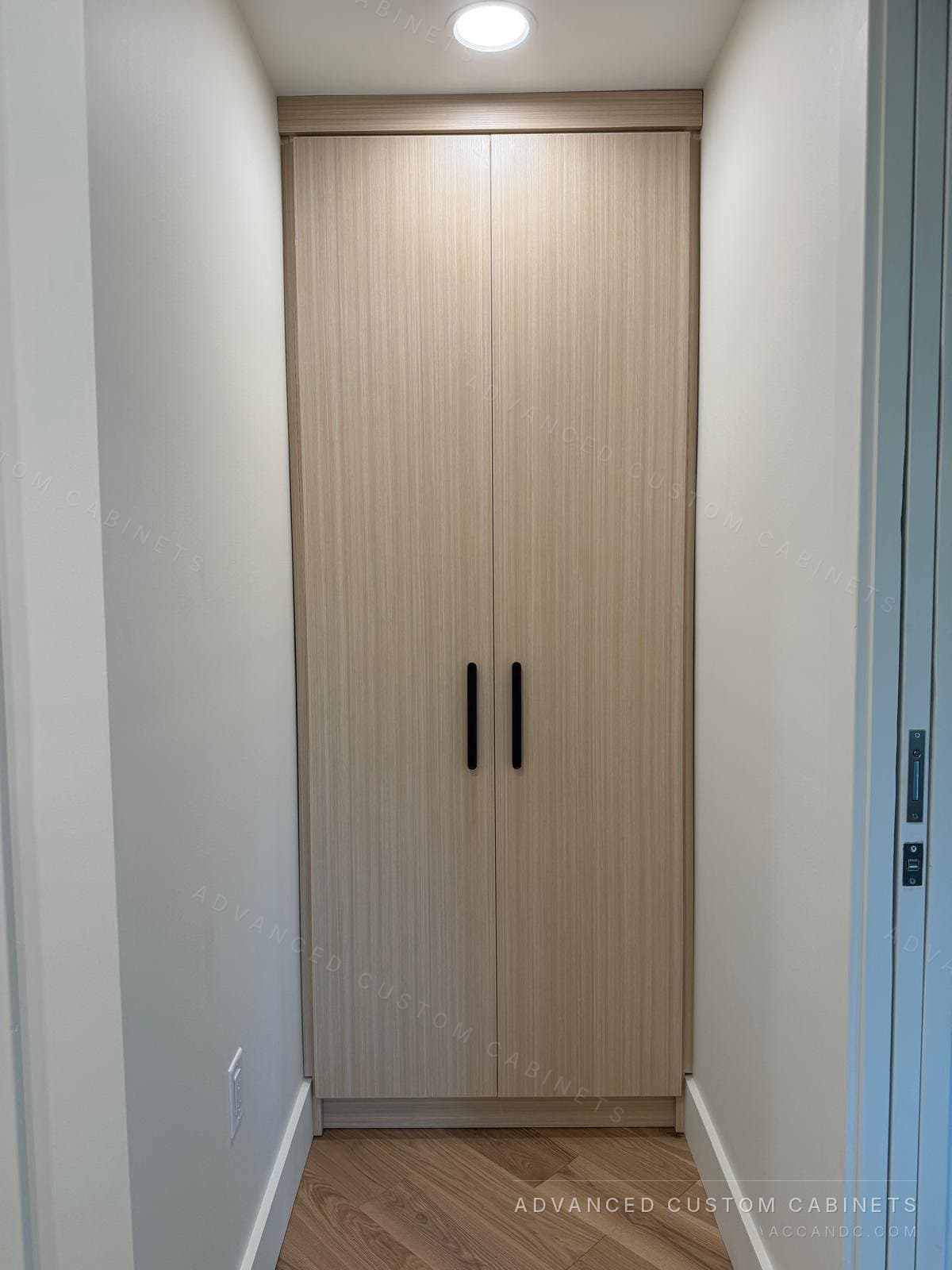
Finishes for a closet that lives next to a bathroom
A linen closet or cabinet shares the air with the shower, so the shelving has to shrug off humidity: laminated board with sealed 2 mm PVC edges rather than bare wood or particleboard, soft-close hinges, and shelves that wipe clean. Open shelves show the folded stacks and keep the air moving; doors hide the backstock and the cleaning supplies. Most linen closets end up with both: open shelves at eye level for the towels, a door or a drawer for everything else.
What it costs
A hall closet refitted inside with adjustable shelves, a pull-out or two and a shelf plan like the one above is priced like a reach-in closet and starts around $400. A built-in bathroom linen cabinet or a hallway tower is priced by its size, doors and drawers, in 25 laminate colors in stock, with the free in-home design and the cost guide as the starting point.
How the planning is done
A designer measures the closet or the alcove on a free in-home visit, counts the towels, sheet sets and blankets with you, and draws the shelves and pull-outs in 3D at the depths above. The cabinets are built in our Warminster, PA shop, usually within 2 to 4 weeks, and installed by our own crew, with a lifetime limited transferable warranty.
Questions people ask
How deep should linen closet shelves be?
14 to 16 inches for towels and sheets, 18 to 20 for the blanket shelf at the top. Builder wire shelves are 12 inches deep, which is shallower than a folded bath towel, so the stacks lean and fall.
How far apart should linen closet shelves be?
10 to 12 inches for towels, 12 to 14 for sheet sets, 16 to 18 for blankets and comforters, 8 to 10 for toiletries. Adjustable shelves let each section take its own spacing.
What goes on each shelf of a linen closet?
Towels and the sheets in weekly use at eye level (48 to 66 inches), blankets and seasonal linens on the top shelf, toiletries and backstock at waist height in a drawer or on shallow shelves, cleaning supplies and the vacuum on the floor under a bottom shelf set at 24 to 36 inches.
What can replace a linen closet in a house that has none?
A tall bathroom linen cabinet 18 to 24 inches wide and 12 to 16 inches deep, a built-in linen tower at the end of a hallway or in an alcove, or a 16-inch-deep linen section inside the laundry room cabinets.
How big is a bathroom linen cabinet?
Typically 18 to 24 inches wide, 12 to 16 inches deep and 84 inches high, with doors above and a drawer or open shelf below. At 12 inches deep it fits beside a vanity or behind a door.